
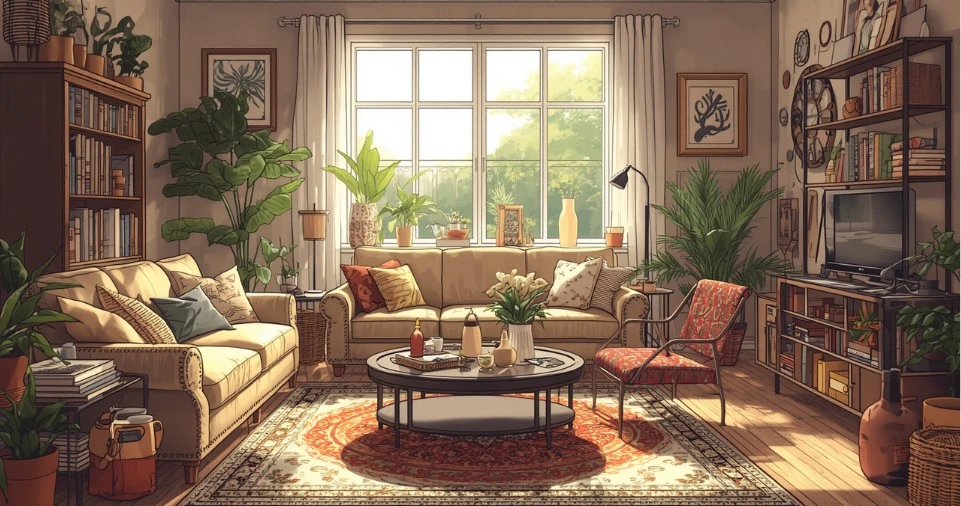

200 square feet is a room roughly the size of a one-car garage or a standard master bedroom. It measures about 10 feet by 20 feet (or 14.14 feet by 14.14 feet if perfectly square) and converts to approximately 18.58 square meters or 22.22 square yards. It’s a compact but usable space — enough for a studio apartment, a home office, a tiny home, or a mid-sized storage unit.
If you’ve ever tried to picture 200 sq ft from a rental listing, a floor plan, or a storage-unit ad, this guide walks you through exactly what it looks like, what fits inside, and how it compares to spaces you already know.
Quick Answer: How Big Is 200 Square Feet?
- Dimensions: 10 ft × 20 ft (rectangular) or 14.14 ft × 14.14 ft (square)
- Metric conversion: 18.58 square meters
- Square yards: 22.22 square yards
- Closest everyday comparison: a one-car garage or a large master bedroom
- Common uses: studio apartment, tiny home, home office, storage unit, backyard shed, hotel room
200 Square Feet in Other Units
Whether you’re shopping for property abroad, ordering furniture in metric, or just curious, here’s the conversion at a glance:
| Unit | Equivalent to 200 sq ft |
|---|---|
| Square meters (m²) | 18.58 m² |
| Square yards (yd²) | 22.22 yd² |
| Square inches (in²) | 28,800 in² |
| Square centimeters (cm²) | 185,806 cm² |
| Acres | 0.00459 acres |
The formula is simple: square feet = length (ft) × width (ft). To convert to square meters, divide by 10.764. To convert to square yards, divide by 9.
What Are the Dimensions of a 200 Square Foot Room?
There’s no single “correct” shape — any two dimensions that multiply to 200 will work. The most common layouts are:
| Layout | Dimensions | Shape | Best For |
|---|---|---|---|
| Rectangular | 10 ft × 20 ft | Long and narrow | Studio apartments, storage units, galley-style rooms |
| Square | 14.14 ft × 14.14 ft | Balanced | Bedrooms, home offices, sitting rooms |
| Wide rectangle | 8 ft × 25 ft | Very long, narrow | Hallway conversions, corridor-style tiny homes |
| Compact rectangle | 12.5 ft × 16 ft | Slightly rectangular | Guest rooms, hobby rooms |
The shape matters more than the raw square footage. A long 10×20 room feels different from a 14×14 square — one favors linear layouts (bed on one end, desk on the other), the other favors central furniture arrangements.
10 Real-Life Comparisons to Visualize 200 Square Feet
Numbers only get you so far. These everyday comparisons make 200 sq ft click:
1. A one-car garage. The most common comparison. A standard single-car garage is roughly 12 ft × 20 ft, which lands close to 200–240 sq ft.
2. A standard master bedroom. Many primary bedrooms in U.S. homes measure around 200 sq ft — big enough for a king-sized bed, two nightstands, a dresser, and walking room.
3. A college dorm room. A typical double-occupancy dorm room hovers right around 200 sq ft — two beds, two desks, two closets, tight fit.
4. A 10×20 storage unit. One of the largest common self-storage sizes. Big enough to hold the contents of a 3-bedroom home or a small vehicle.
5. Two king-sized beds side by side. A king mattress covers roughly 42 sq ft, so about five kings equal 200 sq ft — but side-by-side, two kings plus walking space is a close visual match.
6. A standard 20-foot shipping container. The interior floor of a 20 ft container is about 152 sq ft — close to, but slightly smaller than, 200 sq ft.
7. A generous backyard shed. Larger prefab sheds (10×20) come in right at 200 sq ft — enough for a riding mower, garden tools, bikes, and seasonal storage.
8. A standard hotel room. Most mid-range hotel rooms in the U.S. measure between 200 and 300 sq ft. Budget rooms often sit at the lower end.
9. About 1.5 parking spaces. A standard parking space is 9 ft × 18 ft (162 sq ft). 200 sq ft is a parking spot with roughly 40% extra room.
10. A small studio apartment. Micro-studios in cities like New York, Tokyo, and San Francisco are often marketed at 200 sq ft — a full living space in one room.
Quick trick to feel it in person: grab painter’s tape and mark a 10 × 20 rectangle on your driveway or in a larger room. Walk around inside the lines. You’ll get a truer sense of the space in 30 seconds than any listing photo can give you.
What Can You Fit in 200 Square Feet?
The answer depends entirely on the function. Here’s what actually fits, room by room.
As a Bedroom
- King-sized bed (or queen, with more room to spare)
- Two nightstands
- A 6-drawer dresser
- A small reading chair or bench
- Walking paths on both sides of the bed
As a Home Office
- Full-size desk (up to 6 ft wide)
- Ergonomic office chair
- 2–3 bookcases or a full wall of shelving
- A small filing cabinet
- A guest chair or small couch for calls
As a Studio Apartment
- Full-size bed (or Murphy bed to reclaim floor space)
- Compact sofa or loveseat
- Small dining table for two
- Kitchenette (galley-style, along one wall)
- Bathroom (typically outside the 200 sq ft count)
- Storage via vertical shelving and under-bed bins
As a Storage Unit
- Contents of a 3-bedroom home, including large appliances
- One mid-size vehicle plus boxes stacked around it
- A full home gym setup (rack, bench, treadmill, weights)
- Business inventory for a small e-commerce operation
Is 200 Square Feet Enough to Live In?
For a single person or a minimalist couple, yes — comfortably, with the right layout. For a family or anyone who works from home with heavy equipment needs, it becomes tight fast.
200 sq ft works well for you if:
- You live alone or with one partner
- You own fewer than roughly 200 items of clothing, books, and gear combined
- You spend most of your day outside the home
- You value low rent, low utilities, and easy cleaning over space
- You’re willing to invest in vertical storage and multi-function furniture
200 sq ft will feel cramped if:
- You work from home with multiple monitors, printers, or physical inventory
- You cook elaborate meals and want a full kitchen
- You have kids or pets that need running-around room
- You entertain more than 2–3 guests at a time
- You collect anything bulky — instruments, sports equipment, art supplies
How to Make a 200 Square Foot Space Feel Bigger
The people who thrive in 200 sq ft don’t tolerate the size — they design around it. A few principles do most of the work:
- Go vertical. Use wall-mounted shelves, tall bookcases, and hooks. Every inch of wall is usable floor space in disguise.
- Choose multi-function furniture. Murphy beds, storage ottomans, expandable dining tables, and loft beds all reclaim floor area.
- Stick to a light, neutral palette. White, cream, soft grey, and pale wood reflect light and visually enlarge the room.
- Add mirrors. A large mirror on one wall can nearly double the perceived size of a room by bouncing light and depth.
- Use rugs to zone the space. In a studio, one rug under the bed and another under the living area creates distinct “rooms” without walls.
- Keep sightlines clear. Low-profile furniture (chairs and sofas with visible legs) makes floors look bigger and the room airier.
- Declutter ruthlessly. In 200 sq ft, every item earns its place or it goes. Storage capacity is finite — curation isn’t optional.
How 200 Square Feet Compares to Other Common Sizes
| Size | Rough Equivalent | Typical Use |
|---|---|---|
| 100 sq ft | Walk-in closet, small bathroom | Tiny home loft, single dorm room |
| 150 sq ft | Standard parking space | Small bedroom, home office |
| 200 sq ft | One-car garage, master bedroom | Micro-studio, home office, storage |
| 300 sq ft | School bus interior | Studio apartment, junior 1-bedroom |
| 400 sq ft | Two-car garage | 1-bedroom apartment, small tiny home |
| 500 sq ft | Small 1-bedroom apartment | Comfortable studio or 1-bedroom |
| 1,000 sq ft | Standard 2-bedroom apartment | Small family home |
This side-by-side view is often the fastest way to know whether 200 sq ft is right for your situation.
Frequently Asked Questions
How many square meters is 200 square feet?
200 square feet equals approximately 18.58 square meters. The exact conversion is 200 ÷ 10.764 = 18.58 m².
What are the dimensions of a 200 sq ft room?
The most common dimensions are 10 ft × 20 ft (rectangular) or 14.14 ft × 14.14 ft (square). Any two measurements that multiply to 200 will produce a 200 sq ft room.
Is 200 square feet a big room?
It’s a mid-sized room — larger than a typical small bedroom (120–150 sq ft) but smaller than a standard living room (300–400 sq ft). It’s about the size of a one-car garage or a generous master bedroom.
Can two people live in 200 square feet?
Yes, but comfort depends on layout and lifestyle. Couples who share similar routines, own few belongings, and use vertical storage can live comfortably in 200 sq ft. It’s a common size for micro-studios in major cities.
Is 200 sq ft considered a tiny home?
Yes. According to the tiny-house movement, tiny homes are generally defined as dwellings under 400 sq ft (with the International Residential Code setting the cap at exactly that). 200 sq ft sits right in the sweet spot for tiny-home living — small enough to be truly minimalist, large enough to include a bedroom, kitchen, and bathroom.
How much does it cost to build 200 square feet?
Construction costs vary widely by region and finish level, but a basic 200 sq ft addition or tiny home typically ranges from $20,000 to $60,000 in the U.S. Premium builds with high-end finishes can exceed $80,000.
Is 200 sq ft enough for a home office?
More than enough. A 200 sq ft home office comfortably fits a full desk, ergonomic chair, printer stand, filing cabinet, bookshelves, and even a small seating area for calls or clients.
How many people can fit in 200 square feet?
For casual gatherings, 8–12 people fit comfortably (roughly 20 sq ft per person). For seated events like dinners, plan for 4–6 people to feel comfortable without crowding.
The Bottom Line
200 square feet is a versatile, compact space that lives bigger than the number suggests. Whether you’re sizing up a studio apartment, planning a tiny home, choosing a storage unit, or building a home office, it’s a footprint that works — as long as you plan around vertical space, multi-function furniture, and a light, uncluttered aesthetic.
The next time you see “200 sq ft” in a listing, you won’t need to guess. Picture a one-car garage. Picture a master bedroom. Picture yourself walking a 10 × 20 rectangle. That’s the space — and it’s more usable than most people expect.
Once you’ve mastered visualizing 200 sq ft, the same anchor-object technique works for any measurement — from the small end of the scale all the way up to land parcels of 600 acres or more.
