
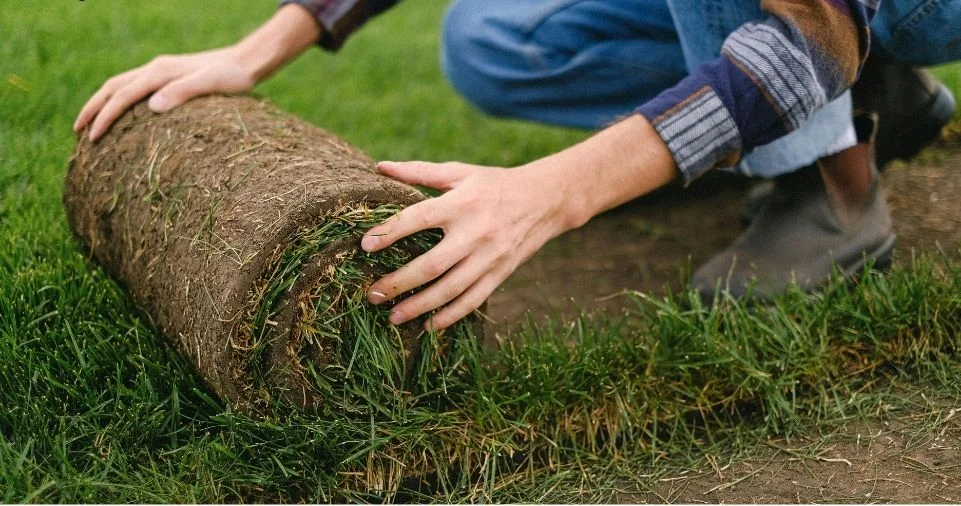

⚡ Quick Answer: A standard roll of sod is 2 feet wide by 5 feet long, covering 10 square feet, and weighs 15 to 30 pounds depending on moisture. Some farms cut 2-foot by 4.5-foot rolls (9 sq ft) or 18-inch by 80-inch rolls (10 sq ft) instead. Commercial big rolls run 2.5 to 4 feet wide by 50 to 100 feet long, covering 225 to 315 sq ft per roll.
You measured the lawn at 1,200 square feet, the supplier quoted you “pallets,” and now you’re standing in your driveway trying to figure out whether a roll is going to weigh 15 pounds or 50. Get the math wrong on a 1,200 sq ft job and you’re short a pallet — or staring at 200 sq ft of sod that’s dead by morning. After eight years writing field guides on measurement and material spec, this is the breakdown that fixes that gap.
A residential sod roll in North America is almost always 2 feet wide by 5 feet long with a soil-and-root thickness of ½ to ¾ inch, yielding 10 square feet of coverage per roll. That 10 sq ft figure is the operating standard across Kentucky bluegrass, tall fescue, and ryegrass farms in the northern United States and Canada. According to CT Sod’s 2025 dimensional spec, each piece weighs 15 to 30 pounds depending on moisture, with 50 to 60 rolls stacked per pallet for 500 to 600 sq ft of total coverage. Regional variants exist: some Minnesota and Wisconsin growers cut 24-inch by 54-inch rolls (9 sq ft, exactly one square yard), and warm-season southern farms cut flat slabs at 16 by 24 inches (2.66 sq ft) instead of rolling them. Always confirm dimensions before you calculate pallet count.
The Standard Sod Roll: Exact Dimensions, Weight, and Why They Vary
A standard roll of sod measures 2 feet wide by 5 feet long, covering 10 square feet of lawn area. That is the dominant residential format across cool-season grass growers in the United States and Canada. Weight runs 15 to 30 pounds per roll based on soil moisture, with 20 pounds being a fair planning average for dry-to-normal harvest conditions.
But “standard” is not “universal.” There is no federal or industry-wide dimensional standard for sod rolls — each farm sets its own cut based on its harvester, its grass species, and what its regional customers expect. The 2×5 format dominates because it balances three things: a roll one person can carry without injury, a piece large enough to install quickly, and a stacked pallet that fits a half-ton pickup’s payload.
The four common roll formats you will see
| Format | Dimensions | Coverage | Weight (typical) |
| Standard residential | 2 ft × 5 ft | 10 sq ft | 15–30 lbs |
| Square-yard cut | 2 ft × 4.5 ft (24″ × 54″) | 9 sq ft | ~40 lbs |
| Narrow long roll | 18″ × 80″ | 10 sq ft | 35–45 lbs |
| Mini-roll | 18″ × 40″ | 5 sq ft | 8–15 lbs |
The 24-inch by 54-inch format is common from Central Wisconsin Sod and other Upper Midwest growers because it equals exactly one square yard — a clean number for old-school landscape contractors who still spec in yards. The 18-inch by 80-inch narrow roll is a Central Sod Farms variant designed for tighter side-yard installations where a 2-foot-wide roll won’t fit through fence gates.
Weight is the variable that catches first-time buyers. A dry roll harvested in July might weigh 15 pounds. The same roll cut the morning after a heavy rain can hit 30 pounds — sometimes 40 if the cut depth was generous. BC Instant Lawns documents weights ranging from 8 to 100 pounds across their inventory, with thickness, soil composition, and recent rainfall as the three drivers.
Why standardization never happened: Sod is a living agricultural product, not a manufactured good. A 10 sq ft Kentucky bluegrass roll from a Minnesota farm weighs differently than a 10 sq ft tall fescue roll from a Maryland farm because the soil profile, root density, and moisture retention of the underlying ground differ. According to a 2022 industry assessment by Turfgrass Producers International, there are more than 2,100 sod farms operating across the United States, each calibrating cut depth and roll size to its own harvester model. The Trebro AutoStack and Brouwer harvesters dominate the market, but operators set their own roll length parameters. The result: 10 sq ft is the dominant figure, but the exact dimensions reaching the dimensions reaching your driveway depend entirely on which farm cut it.
How Many Rolls of Sod Are on a Pallet? (And What Each Pallet Weighs)
A standard pallet of sod holds 45 to 60 rolls, covering 450 to 600 square feet, and weighs 1,500 to 3,000 pounds. The exact count depends on the roll dimension your farm uses and how high they stack.
Most cool-season farms in the Northeast and Midwest stack 50 rolls per pallet (500 sq ft) as the default. New York and New England growers often stack to 60 rolls (600 sq ft) to maximize delivery efficiency. Central Sod Farms documents 60 rolls per pallet as their standard, with full pallet weight running 2,000 to 3,000 pounds depending on moisture.
Pallet specs at a glance
| Region / Type | Rolls per Pallet | Coverage | Pallet Weight |
| Cool-season (CT, NY, MA) | 50–60 rolls | 500–600 sq ft | 750–1,500 lbs |
| Cool-season (MN, WI heavy) | 50–60 rolls | 450–600 sq ft | 2,000–3,000 lbs |
| Warm-season slabs (FL, GA, TX) | 150–170 slabs | 400–450 sq ft | 1,500–3,000 lbs |
| Dry summer harvest | Same count | Same | Lighter end of range |
| After heavy rain | Same count | Same | Up to 4,000 lbs (warm-season) |
The split between northern rolls and southern slabs matters for your math. Warm-season grasses — bermuda, zoysia, St. Augustine, centipede — don’t roll cleanly because their stolon-based root structure and thicker soil profile resist bending. So southern farms cut them as 16-inch by 24-inch flat slabs covering 2.66 sq ft per piece, with 150 to 170 slabs per pallet for roughly 400 sq ft of coverage. If you live in Florida or Texas and someone quotes you “rolls,” ask whether they mean rolls or slabs before you calculate quantity.
For a 5,000 sq ft yard using standard 2×5 rolls, you need 500 rolls — about 10 pallets at 50 rolls each, or 8 to 9 pallets at 60 rolls each. Always add 5 to 10 percent extra for trimming around curves, walkways, and garden beds. HomeGuide’s 2026 cost research recommends 10 percent extra for irregular yards.
Big Roll Sod vs Standard Sod: The Size Difference Most Guides Skip
Big roll sod is the commercial-grade format used on athletic fields, golf courses, and large estate lawns. A big roll measures 2.5 to 4 feet wide by 50 to 100 feet long, covering 150 to 400 square feet per roll, and weighs 1,100 to 2,000 pounds. They require specialized installation equipment — typically a tractor-mounted unroller or three-point hitch attachment — because no human can manually lift a 1,500-pound roll.
Specific big roll dimensions in market
| Supplier | Width × Length | Coverage | Weight |
| McKellip Sod Farm | 2.5 ft × 100 ft | 250 sq ft | 1,100–1,400 lbs |
| Central Wisconsin Sod | 42″ × 65 ft | 225 sq ft | 1,700–2,000 lbs |
| Seven Cities Sod | 3.5 ft × 90 ft | 315 sq ft | ~1,500 lbs |
| Industry range (commercial) | 2–4 ft × up to 100 ft | 150–400 sq ft | 1,100–2,200 lbs |
According to McKellip Sod Farm’s commercial spec sheet, their 2.5-foot by 100-foot big roll covers 25 times the area of a standard 2×5 residential roll. The reason commercial installers use them is simple: a single big roll covers what 25 standard rolls cover, with one continuous seam instead of 25 — and a two-person crew with the right unroller can lay 5,000 sq ft in a single day versus three or four days by hand.
The catch most homeowners miss: big rolls require minimum orders, typically 5,000 sq ft or more, and you need a tractor or skid steer on site to unroll them. If you’re sodding a 2,000 sq ft suburban backyard, big rolls aren’t an option — you’re ordering standard pallets whether you want to or not.
How to Calculate Exactly How Many Sod Rolls You Need
Measure your lawn area in square feet, then divide by the coverage per roll (usually 10 sq ft), then add 5 to 10 percent for waste. That formula gives you a roll count that survives real installation conditions instead of failing at the edges.
The four-step calculation
- Measure the area. For rectangular sections: length × width. For irregular shapes: break the area into rectangles and triangles, calculate each, then add them together. A triangle is base × height ÷ 2.
- Add a waste factor. Use 5% for simple rectangular lawns with straight edges. Use 10% for yards with curves, garden beds, trees, or angled hardscape — anywhere you’ll need to cut sod to fit.
- Divide by roll coverage. For standard 10 sq ft rolls: total sq ft (with waste) ÷ 10 = roll count. For 9 sq ft rolls: divide by 9.
- Round up to the nearest pallet. Farms sell whole pallets, not partial. A 530 sq ft job at 50 rolls per pallet still requires two full pallets.
Worked example — a 2,400 sq ft backyard with curved garden beds:
- Base area: 2,400 sq ft
- Waste factor: 10% (curves present) = 240 sq ft
- Total needed: 2,640 sq ft
- Roll count (at 10 sq ft each): 264 rolls
- Pallet count (at 50/pallet): 5.28 → order 6 pallets, or 5 pallets at 60-roll stacking
The shortcut most calculators get wrong: if your supplier prices by the pallet rather than the square foot, the 60-roll pallet is a better per-square-foot value than the 50-roll pallet at the same price. Some Northeast growers — see CT Sod’s pallet breakdown — stack 60 rolls specifically to offer that math advantage on delivery efficiency.
What Does a Roll of Sod Cost — and How Cost Per Square Foot Compares?
A single roll of sod costs $3 to $9 in 2026, depending on grass type, region, and whether you buy by the roll or by the pallet. Buying by the pallet drops the per-square-foot cost significantly — sometimes by 30 to 40 percent compared to single-roll retail pricing.
Sod cost breakdown by purchase format (2026 pricing)
| Format | Coverage | Typical Cost | Cost / sq ft |
| Single roll (retail pickup) | 10 sq ft | $3–$9 | $0.30–$0.90 |
| Pallet (450–500 sq ft) | 500 sq ft | $150–$450 | $0.30–$0.85 |
| Premium varieties (Zoysia, Bermuda) | per pallet | $250–$450 | $0.50–$0.90 |
| Big roll commercial (per sq ft) | 250 sq ft | $0.40–$0.85 | $0.40–$0.85 |
According to LawnMasters’ 2026 pricing analysis, a 5,000 sq ft lawn costs $1,500 to $4,250 for sod alone, or $3,000 to $8,000 with professional installation. Delivery adds $50 to $250 per load on top of material costs, with many farms requiring a one-pallet minimum for delivery.
Grass type drives most of the cost variance. Kentucky bluegrass and tall fescue sit at the lower end ($0.30 to $0.60 per sq ft). Zoysia, Bermuda, and St. Augustine — the premium warm-season varieties — run $0.50 to $0.90 per sq ft because they take longer to mature on the farm (zoysia needs 18 to 24 months versus 12 to 15 for fescue) and ship from a narrower geographic range.
Sod Roll Weight and Why It Matters for Transport, Handling, and Installation
Sod roll weight is the variable that determines whether you can pick up your own sod or need delivery, how many helpers you’ll need on install day, and whether your pickup truck can legally carry one pallet. Most homeowners underestimate this by 30 to 50 percent.
A single 2×5 roll weighs 15 to 30 pounds in normal conditions. After heavy rain, the same roll can hit 40 to 50 pounds because saturated soil is heavy — water alone weighs 8.34 pounds per gallon, and a roll holds significant moisture in its root-and-soil layer. For visual reference on what a 2-foot dimension actually looks like in your hands, see our breakdown of how big 18 inches is — sod rolls run just 6 inches wider than that reference.
Pallet weight vs vehicle payload
| Vehicle | Typical Payload | Can Carry? |
| Compact car / SUV | 800–1,000 lbs | 100–200 sq ft of sod only |
| Half-ton pickup (F-150, Silverado 1500) | 1,500–2,000 lbs | 1 cool-season pallet (dry) |
| 3/4-ton pickup (F-250) | 3,000–4,000 lbs | 1 pallet (any condition) |
| 1-ton pickup or trailer | 4,000+ lbs | 1–2 pallets reliably |
| Semi-truck flatbed | 40,000+ lbs | Up to 32 pallets |
The payload mistake costs people money. A homeowner with a Ford F-150 books pickup for a 1,500 sq ft job thinking three pallets will fit. Three pallets weigh 3,000 to 4,500 pounds — well past the F-150’s 1,700 to 2,000 pound payload limit. The supplier won’t load past safe capacity, the customer makes three trips instead of one, and the last pallet sits at the farm overnight degrading. Order delivery for any job over 600 sq ft unless you have a 3/4-ton truck.
Time-on-pallet is the deadline you can’t miss. Sod is perishable — it begins degrading the moment it’s severed from the soil, and pallet heat accelerates the breakdown. In summer temperatures above 75°F, a cool-season pallet shows significant damage within 12 to 24 hours of harvest. In cooler weather, you have 24 to 48 hours. Same-day installation is the operating target for any sod order.
How a Sod Roll Compares to Other Common Lawn Measurements
Putting a sod roll next to objects you already know makes the dimension stick. Most homeowners struggle to visualize 10 square feet because square footage is an abstraction — but a sod roll is a physical object you can anchor to other familiar shapes.
- A standard 2×5 sod roll equals roughly the area of a yoga mat unrolled flat (most yoga mats are 24″ × 68″ or about 11.3 sq ft).
- Three sod rolls laid end to end equals one parking space (most parking spaces are 9 ft × 18 ft = 162 sq ft; three rolls cover 30 sq ft, so 16 rolls cover one full space).
- A pallet of 50 rolls equals the footprint of an average two-car garage (about 400 to 500 sq ft of driveway-side floor).
- A 5,000 sq ft lawn equals 500 rolls — enough sod, end to end, to stretch 2,500 feet (just under half a mile).
The scale jump from residential to commercial is where most people lose their intuition. A single big roll from McKellip Sod (250 sq ft) covers more ground than the average suburban front lawn section between driveway and sidewalk. For context on larger area measurements, see how big 500 acres is — that’s roughly enough land to sod 2.18 million standard rolls, which would weigh over 50 million pounds.
Frequently Asked Questions About Sod Roll Size
How big is one roll of sod in square feet?
One standard roll of sod covers 10 square feet — the result of cutting a 2-foot-wide by 5-foot-long piece. Some farms cut 9 sq ft rolls (2 ft × 4.5 ft) instead. Always confirm dimensions with your specific supplier before calculating quantities.
How many square feet does a pallet of sod cover?
A standard pallet of sod covers 450 to 600 square feet. Cool-season cool-season pallets typically hold 50 rolls (500 sq ft) or 60 rolls (600 sq ft). Warm-season slab pallets cover 400 sq ft with 150 to 170 slabs.
How much does a roll of sod weigh?
A standard 2-foot by 5-foot roll of sod weighs 15 to 30 pounds in normal conditions, with 20 pounds being a fair average. After heavy rain or with thicker soil cuts, weight can reach 40 to 50 pounds per roll.
Can I fit a pallet of sod in a pickup truck?
A half-ton pickup (Ford F-150, Chevy Silverado 1500) can legally carry one cool-season pallet at the dry-end weight of 750 to 1,000 pounds. Two pallets exceed half-ton payload limits. Warm-season pallets at 1,500 to 3,000 pounds require a 3/4-ton or larger truck.
How long is a big roll of sod?
Commercial big rolls run 50 to 100 feet long by 2.5 to 4 feet wide, covering 150 to 400 square feet per roll. The most common spec is 2.5 ft × 100 ft (250 sq ft), used for athletic fields, golf courses, and large landscape installations requiring 5,000+ sq ft.
What to Do With This: Your Sod Roll Sizing Checklist
A standard roll of sod is 2 feet by 5 feet, covers 10 square feet, and weighs 15 to 30 pounds. A pallet holds 50 to 60 rolls covering 500 to 600 square feet and weighs up to 3,000 pounds. Commercial big rolls cover 250 sq ft each but require tractor-mounted installation equipment.
Three concrete steps before you place a sod order:
- Measure your lawn twice. Use the rectangle-plus-triangles method, add 10% for waste on curved yards, and write the number down before you call the supplier.
- Confirm roll dimensions with your specific farm. Don’t assume 10 sq ft — ask whether they cut 2×5, 2×4.5, or 18×80, because that decision changes your pallet count.
- Match your delivery vehicle to your pallet weight. Half-ton pickup = one cool-season pallet maximum. For anything over 600 sq ft, book delivery instead of pickup.
Sod is the fastest path to a green lawn — usable in 15 to 20 days versus the 2 to 3 months seed needs. But the logistics are unforgiving once the harvester cuts. Get the size right at the order stage and the install runs clean.
This guide reflects 2026 sod farm specifications and pricing data. Roll dimensions are not regulated by any federal standard — always confirm specs with your specific supplier before final ordering.
