
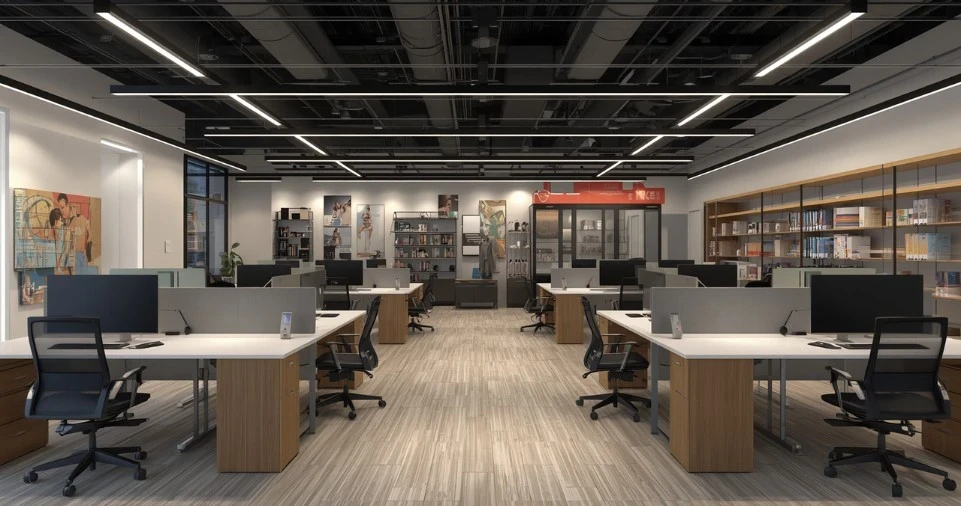

600 square feet is a room roughly the size of a standard 1-bedroom apartment or a three-car garage minus one bay. It measures about 20 feet by 30 feet (or 24.49 feet by 24.49 feet if perfectly square) and converts to approximately 55.74 square meters or 66.67 square yards. It’s a common size for standard 1-bedroom apartments, small 2-bedroom units, mid-size ADUs, and small-house-movement dwellings.
If you’ve seen “600 sq ft” on a listing or floor plan and struggled to picture it, this guide walks through the real dimensions, what fits inside, and how it stacks up against spaces you already know.
Quick Answer: How Big Is 600 Square Feet?
- Dimensions: 20 ft × 30 ft (rectangular), 24.49 ft × 24.49 ft (square), or 15 ft × 40 ft (long)
- Metric conversion: 55.74 square meters
- Square yards: 66.67 square yards
- Closest everyday comparison: a standard 1-bedroom apartment
- Common uses: 1-bedroom apartment, small 2-bedroom, ADU, small-house-movement home, small commercial space
600 Square Feet in Other Units
Here’s the conversion at a glance:
| Unit | Equivalent to 600 sq ft |
|---|---|
| Square meters (m²) | 55.74 m² |
| Square yards (yd²) | 66.67 yd² |
| Square inches (in²) | 86,400 in² |
| Square centimeters (cm²) | 557,418 cm² |
| Acres | 0.01377 acres |
The formula is simple: square feet = length (ft) × width (ft). To convert to square meters, divide by 10.764. To convert to square yards, divide by 9.
What Are the Dimensions of a 600 Square Foot Room?
Any two dimensions that multiply to 600 will work. These are the most common:
| Layout | Dimensions | Shape | Best For |
|---|---|---|---|
| Rectangular | 20 ft × 30 ft | Balanced rectangle | 1-bedroom apartments, ADUs, offices |
| Square | 24.49 ft × 24.49 ft | Nearly square | Open studios, workshops, small retail |
| Long rectangular | 15 ft × 40 ft | Long and narrow | Shotgun apartments, storage units |
| Wide rectangular | 12 ft × 50 ft | Very long | Corridor apartments, warehouses |
The 20×30 rectangle is the most common in residential real estate — it’s the standard dimension for many 1-bedroom apartments and mid-size ADUs.
10 Real-Life Comparisons to Visualize 600 Square Feet
Numbers only get you so far. These everyday comparisons make 600 sq ft click:
1. A standard 1-bedroom apartment. The U.S. average 1-bedroom apartment is around 750 sq ft, but many older buildings and city-center units measure 550–650 sq ft. 600 sq ft is the common “compact but complete” 1-bedroom.
2. A three-car garage minus one bay. A standard three-car garage is 600–900 sq ft. 600 sq ft is the smallest standard three-car — or a two-car garage plus one bay of workshop.
3. A small 2-bedroom apartment. In cities like New York and San Francisco, “junior 2-bedroom” apartments start around 600 sq ft — small second bedroom used mostly as an office or nursery.
4. Two standard hotel rooms plus a hallway. Standard hotel rooms measure 200–300 sq ft. 600 sq ft is roughly two joined rooms with connecting space — the classic connected-family-suite plus.
5. A large storage unit. At 600 sq ft, you’re above standard self-storage sizes and entering commercial warehouse territory. Holds the contents of a large family home plus multiple vehicles.
6. A mid-size ADU. Accessory dwelling units frequently measure 500–800 sq ft. 600 sq ft is a middle-of-the-range ADU — full 1-bedroom with real kitchen and dining space.
7. Nearly four parking spaces. Four side-by-side U.S. parking spaces total 648 sq ft. 600 sq ft is basically a small four-car parking area.
8. A small-house-movement home. The “small house” movement (distinct from tiny houses under 400 sq ft) generally covers homes 400–1,000 sq ft. 600 sq ft is a common small-house size.
9. A generous artist’s or maker studio. Larger working studios for artists, ceramicists, and makers commonly measure 500–800 sq ft. 600 sq ft gives room for multiple workstations, storage, and clean-up.
10. About one-fifth of a basketball half-court. A regulation basketball half-court is 47 × 50 = 2,350 sq ft. 600 sq ft is roughly one-quarter — the free-throw area plus the key.
Quick trick to feel it in person: stand in the middle of a two-car garage, then walk one full car-length in one direction. That’s roughly 600 sq ft.
What Can You Fit in 600 Square Feet?
The answer depends on the function. Here’s what actually fits, use case by use case.
As a 1-Bedroom Apartment
- Separate bedroom with king-size bed, nightstands, and dresser
- Full living room with sofa, chairs, coffee table, and TV
- Full dining table for 4–6
- Full kitchen with appliances and prep space
- Full bathroom
- Coat closet, linen closet, and bedroom closet
As a Small 2-Bedroom
- Master bedroom with queen bed and closet
- Second smaller bedroom (nursery, office, guest)
- Combined living/dining area
- Full kitchen
- One full bathroom
- Storage closets
As an ADU
- Full bedroom
- Real living room
- Full kitchen
- Full bathroom
- Small home office nook
- Washer/dryer closet
- Small entryway
As Commercial Space
- Small retail shop with sales floor, storage, and restroom
- Small professional office with reception, 2 offices, and conference space
- Boutique fitness studio for classes of 8–12
- Café or bakery with counter service and a few tables
Is 600 Square Feet Enough to Live In?
For most people, yes — comfortably. 600 sq ft is where “small living” fully transitions into “just living.” Real 1-bedroom experiences, functioning families, and full lifestyle flexibility all fit within this footprint.
600 sq ft works well for you if:
- You live alone, with a partner, or as a small family
- You want a real 1-bedroom or small 2-bedroom experience
- You value the balance between space, affordability, and manageable maintenance
- You entertain occasionally
- You work from home with a laptop or small setup
600 sq ft may feel tight if:
- You have 3+ children
- You work from home with a dedicated multi-monitor setup and physical inventory
- You entertain large groups regularly
- You have hobbies requiring dedicated large spaces (music, art, workshop, home gym)
How to Make a 600 Square Foot Space Feel Bigger
At 600 sq ft you have real design freedom. What works best:
- Real rooms, real doors. Use walls and doors to create defined spaces. Open-plan feels smaller at this size than divided-plan.
- Full-size furniture. Undersized furniture makes rooms look emptier and smaller. Real sofas, real dining tables, and real beds signal “this is a proper home.”
- Vertical storage where it matters. Kitchen cabinetry to the ceiling and bedroom closets to the top of the wall reclaim serious storage capacity.
- Layered lighting. Overhead + task + accent + ambient lighting makes rooms feel intentional and larger.
- One bold design choice per room. A dark accent wall, a colorful backsplash, or a statement piece works well at 600 sq ft without overwhelming.
- Barn doors or pocket doors. Especially between the bedroom and living area — reclaims swing space.
- Zone rugs. A large rug under the living area and a runner in the hallway define zones and add warmth.
- Prioritize natural light. More windows, sheer curtains, and reflective surfaces amplify daylight.
How 600 Square Feet Compares to Other Common Sizes
| Size | Rough Equivalent | Typical Use |
|---|---|---|
| 100 sq ft | Walk-in closet | Small bedroom, office, storage |
| 200 sq ft | One-car garage | Micro-studio, master bedroom |
| 300 sq ft | School bus interior | Studio apartment |
| 400 sq ft | Two-car garage | Tiny home max, junior 1-bedroom |
| 500 sq ft | Small 1-bedroom apartment | 1-bedroom, ADU, cottage |
| 600 sq ft | Standard 1-bedroom apartment | 1-bedroom, small 2-bedroom, ADU |
| 1,000 sq ft | Standard 2-bedroom apartment | Small family home |
600 sq ft is exactly 3× larger than 200 sq ft — see our companion guide on how big 200 square feet actually is for the smaller reference point. That 3× jump often marks the transition from “compromise” to “complete.”
Frequently Asked Questions
How many square meters is 600 square feet? 600 square feet equals approximately 55.74 square meters. The exact conversion is 600 ÷ 10.764 = 55.74 m².
What are the dimensions of a 600 sq ft room? The most common dimensions are 20 ft × 30 ft (rectangular) or 24.49 ft × 24.49 ft (square). Any two measurements that multiply to 600 work — 15 × 40 and 12 × 50 are also common.
Is 600 sq ft big enough for a 1-bedroom apartment? Yes, comfortably. 600 sq ft fits a real bedroom, real living room, full kitchen, and full bathroom without compromise. It’s a common size for standard 1-bedroom apartments across the U.S.
Can a family live in 600 square feet? Yes, for small families (2 adults + 1–2 children). Families in 600 sq ft often use bunk beds, wall-mounted desks, and shared spaces to make it work.
Is 600 sq ft considered a tiny home? No, technically. The strict tiny-house movement definition caps tiny homes at 400 sq ft. 600 sq ft falls within the broader “small house movement,” which generally covers homes 400–1,000 sq ft.
Can two people live comfortably in 600 sq ft? Yes, very comfortably. 600 sq ft gives couples real separation between sleeping, living, and dining areas — enough space to spend time apart without leaving the home.
Is 600 sq ft good for a small business? Yes. 600 sq ft works well for small retail shops, boutique fitness studios, professional offices, cafés, or salons. It’s above the typical minimum for commercial rental in most cities.
How much does a 600 sq ft apartment cost? Rent varies dramatically by city. In small towns and rural areas, 600 sq ft apartments rent for $600–$1,000/month. In major U.S. cities like New York, San Francisco, or Los Angeles, they can rent for $2,500–$4,500/month.
The Bottom Line
600 square feet is where “small” fully becomes “complete.” It’s the size of a standard 1-bedroom apartment, a mid-size ADU, a small 2-bedroom in dense cities, or a small commercial space. Whether you’re renting your first apartment, planning an ADU, evaluating a small-house-movement home, or leasing a small business location, 600 sq ft is a footprint where you can live and work without ongoing spatial compromise.
Next time you see “600 sq ft” on a listing, you won’t need to guess. Picture a standard 1-bedroom apartment. Picture a small ADU. Picture a 20 × 30 rectangle. That’s the space.
Once you can visualize 600 sq ft, the same anchor-object technique scales to any measurement — from small rooms all the way up to land parcels of 250 acres or more.
