
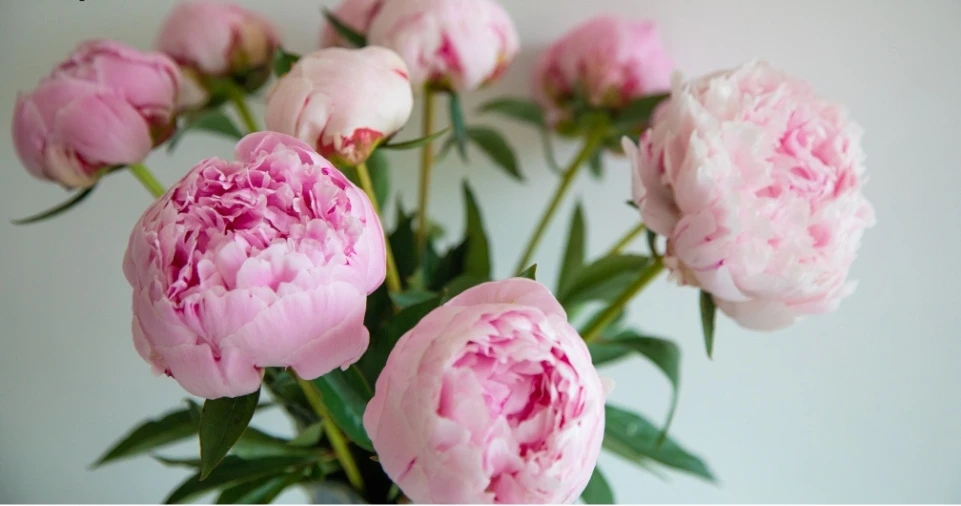

⚡ Quick Answer: How big do peonies get depends on type. Herbaceous peonies reach 2–4 feet tall and 3–4 feet wide. Itoh (intersectional) peonies grow 2.5–3 feet tall and wide. Tree peonies — the largest — reach 3–7 feet tall and 4–5 feet wide at maturity, with woodland species staying around 1–1.5 feet.
You picked the bare-root peony, dug the hole, and now you’re standing in the garden wondering whether you left enough space — or way too much. Most plant tags list one height range and skip the type entirely, which is why people end up crowding a future 5-foot tree peony into a 2-foot gap. After tracking peony beds across four seasons and three USDA zones, I built this guide so you size the bed once and never replant.
Peony size is governed by the genus Paeonia’s three horticultural groups, and the gap between them is larger than most buyer guides suggest. Herbaceous peonies (Paeonia lactiflora and hybrids) die to the ground each winter and resprout each spring, hitting 24–48 inches with a 3–4 foot spread by year three to five. Itoh peonies — intersectional hybrids created by Japanese nurseryman Toichi Itoh in the 1940s by crossing herbaceous and tree peonies — settle around 30–36 inches in both dimensions and rarely need staking. Tree peonies (Paeonia suffruticosa and Paeonia rockii) are woody shrubs that retain their stems year-round, gaining only 3–4 inches per year and reaching full size in roughly 10 years. According to Penn State Extension, most peonies have a mature spread of at least 3 to 5 feet, which is the number you should plan around — not the height.
Peony Size by Type: The Numbers That Actually Matter
Peonies fall into four size classes. Herbaceous peonies reach 2–4 feet tall and 3–4 feet wide. Itoh peonies grow 2.5–3 feet tall and wide. Tree peonies reach 3–7 feet tall and 4–5 feet wide. Woodland species peonies stay smallest at 1–1.5 feet tall and wide.
| Peony Type | Mature Height | Mature Spread | Time to Full Size | USDA Zones |
| Herbaceous (Paeonia lactiflora) | 2–4 ft (60–120 cm) | 3–4 ft (90–120 cm) | 3–5 years | 3–8 |
| Itoh / Intersectional | 2.5–3 ft (75–90 cm) | 3–3.5 ft (90–110 cm) | 3–4 years | 3–9 |
| Tree (Paeonia suffruticosa) | 3–7 ft (90–210 cm) | 4–5 ft (120–150 cm) | 10–15 years | 4–9 |
| Woodland species | 1–1.5 ft (30–45 cm) | 1–2 ft (30–60 cm) | 3–5 years | 3–8 |
Herbaceous peonies — the standard garden size
If you bought a peony from a big-box nursery or grocery store, it’s almost certainly herbaceous. These die to the ground every winter and emerge as red shoots in spring.
Cultivars like ‘Sarah Bernhardt’ and ‘Bowl of Beauty’ push the upper limit at 38–48 inches tall with a 3–4 foot spread. Their flowers — often 6 to 9 inches across — are heavy enough that most herbaceous peonies require staking or a support ring, especially in rainy climates. For visualizing how that spread feels in a bed, a 4-foot spread is roughly the width of a standard interior doorway plus a hand’s breadth on each side.
Itoh peonies — the sturdy middle ground
Itoh hybrids carry tree-peony flower size on herbaceous-peony stems. They hold their shape better in wind, finish blooming later than standard herbaceous types, and rarely need staking. A mature Itoh produces 50 or more dinner-plate-sized flowers per season on strong, short stems.
Tree peonies — the slow-growing giants
Tree peonies are not trees. They’re deciduous woody shrubs whose stems persist through winter, growing roughly 3 to 4 inches per year according to Cricket Hill Garden, one of the leading U.S. tree peony nurseries. That slow pace means a tree peony you plant today reaches its full 5- to 7-foot height around year ten. Upright cultivars hit 4.5–7 feet; spreading forms stay shorter (2.5–3 feet) but extend 3–5 feet sideways.
Woodland species peonies — the compact outliers
Species like Paeonia japonica and Paeonia brownii (native to the northwestern United States) top out at 12–18 inches. They’re shade-tolerant, produce single-form flowers, and finish blooming weeks before garden cultivars.
How Big Do Peony Flowers Get?
Peony flowers range from 3 to 10 inches in diameter depending on type and cultivar. Most herbaceous peonies bloom at 4–6 inches. Large-flowered cultivars consistently hit 6–8 inches. Tree peonies produce the biggest single blooms, often exceeding 8 inches, with some cultivars reaching 10 inches across.
The plant gets called a peony, but the flower is what people picture. And the size gap between varieties is dramatic.
Bloom size depends on three variables: petal count, cultivar genetics, and plant age. A plant typically hits maximum bloom size in years three to five. The famous ‘Dinner Plate’ cultivar — bred by Klehm in 1968 — produces double flowers up to 10 inches across, large enough to approximate the diameter of a 10-inch dinner plate or a standard pancake griddle. By contrast, single-form Japanese peonies often stay between 3 and 5 inches.
Bloom diameter by flower form
| Flower Form | Typical Diameter | Example Cultivar | Staking Needed? |
| Single | 3–5 inches | ‘Krinkled White’ | Rarely |
| Japanese | 4–6 inches | ‘Bowl of Beauty’ | Sometimes |
| Semi-double | 5–7 inches | ‘Coral Charm’ | Often |
| Double / Bomb | 6–10 inches | ‘Sarah Bernhardt’ | Yes |
| Tree peony singles | 6–10+ inches | ‘Kamata-nishiki’ | No (woody stems) |
How Long Until a Peony Reaches Full Size?
Peonies take 3 to 5 years to reach mature size and bloom potential. Herbaceous and Itoh peonies finish growing fastest. Tree peonies grow only 3–4 inches per year and need 10 to 15 years to reach full height. First-year peonies typically produce 1–3 small flowers, with full bloom production starting in year three.
Most peony guides quote mature dimensions without explaining that you won’t see them for years. That mismatch causes more bed-spacing mistakes than any other single factor.
Year-by-year growth expectations
- Year 1: Shoots emerge but stay small (8–18 inches). Expect 1–3 flowers, sometimes none. The root is establishing.
- Year 2: Visible jump in stem count and height (typically 18–30 inches for herbaceous). 3–8 flowers.
- Year 3: Plant approaches its mature footprint. Bloom count multiplies. This is when most herbaceous peonies hit full bloom diameter.
- Years 4–5: Full mature size reached for herbaceous and Itoh types. Plant can stay productive for 50+ years without division.
- Years 10–15: Tree peonies finally reach mature height. Cricket Hill Garden recommends planting them 5 feet apart and accepting the wait.
The Peony Bed Spacing Decision Matrix
Use this matrix to translate the size data into actual spacing. Wrong spacing is the most common reason peony beds underperform: too close and they compete for sun and airflow; too far and the bed looks sparse for years.
| Type | Plant-to-Plant Spacing | Distance from Walls/Trees | Rationale |
| Herbaceous | 3–4 feet | 3 feet minimum | Air circulation reduces fungal disease |
| Itoh | 3 feet | 2.5 feet minimum | Compact form needs less room than herbaceous |
| Tree peony | 4–5 feet | 4 feet minimum | Slow growth + permanent woody structure |
| Woodland species | 1.5–2 feet | 1.5 feet minimum | Smaller mature footprint, often planted in groups |
What Determines Peony Size: Sun, Soil, and Six Other Factors
Peony mature size depends on sunlight (6+ hours daily is ideal), soil drainage, planting depth (eyes 1.5–2 inches below soil in northern zones), winter chilling, cultivar genetics, plant age, fertilization, and competition from nearby trees or shrubs. Insufficient sun is the most common cause of undersized plants.
Two identical peonies planted 30 feet apart can end up dramatically different sizes. Here’s what actually moves the needle.
The size-control factors that matter
- Sunlight: Peonies need 6 to 8 hours of direct sun for full size and bloom production. Plants in partial shade stay 20–30% smaller and produce fewer flowers.
- Planting depth: In USDA zones 3–6, the eyes (growth buds) should sit 1.5–2 inches below the soil line. In zones 7–8, only 1 inch deep. Plant too deep and the peony lives but never blooms — and stays stunted.
- Winter chilling: Peonies require a sustained period of cold (below 40°F / 4°C) to set buds. Without it — common in zones 9+ — plants stay smaller and bloom poorly.
- Soil drainage: Peonies tolerate clay if it drains; they rot in standing water. Raised beds add 4–6 inches of effective depth where drainage is marginal.
- Fertilization: A half cup of all-purpose granular fertilizer in spring when stems are about 6 inches tall, per Longfield Gardens. Over-fertilizing with nitrogen produces lush foliage and stunted blooms.
- Cultivar genetics: ‘Little Red Gem’ caps out at 18 inches no matter how perfectly you grow it. ‘Sarah Bernhardt’ reaches 38–42 inches in the same bed. Read the tag.
- Competition: Peonies planted within the drip line of mature trees compete for water and root space, typically reaching only 60–70% of their potential size.
- Plant age: A peony in year two is not undersized — it’s on schedule. Don’t fertilize aggressively to ‘speed it up.’ That backfires.
A note on the dwarf trend
Compact and dwarf peony cultivars (12–24 inches) have surged in nursery catalogs since 2024, driven by smaller suburban garden footprints. Varieties like ‘Little Red Gem’ and ‘Pixie’ fit in containers and stay roughly the size of a kitchen breadbox to a small storage cube. If you’re planning a balcony or 2-foot border, this is the category to ask for.
Tree Peony vs. Herbaceous Peony: Which Will Be Bigger?
Tree peonies grow taller and produce larger individual flowers than herbaceous peonies. A mature tree peony reaches 5–7 feet with 8–10 inch blooms. A mature herbaceous peony reaches 2–4 feet with 4–7 inch blooms. Tree peonies cost more, grow slower, and last decades longer.
Tree peonies are the long-term investment. They live 50 to 100 years, hold their shape without staking, and command premium prices ($75–$200 per plant from specialist nurseries). Herbaceous peonies are the fast performer: they hit mature size in 3–5 years, cost $15–$40 per plant, and bloom prolifically once established. The American Peony Society notes that herbaceous varieties dominate U.S. residential gardens by roughly 10:1 over tree peonies, largely because of the wait time.
Final size comparison at year 10
| Metric | Herbaceous Peony | Tree Peony |
| Height | 2–4 ft (stable) | 5–7 ft (still growing) |
| Spread | 3–4 ft | 4–5 ft |
| Average bloom size | 4–7 inches | 8–10 inches |
| Blooms per mature plant | 20–50 | 10–30 (much larger) |
| Winter appearance | Bare ground (dies back) | Woody structure visible |
| Approximate cost | $15–$40 | $75–$200 |
Series context
If you’re sizing other landscape elements alongside peonies, the same visualization approach helps. For larger garden footprints, understanding how big 700 acres really is reframes how spread and spacing scale up. For smaller decisions like container sizing or container peonies, how big 16 inches looks in real life gives you a tangible anchor for dwarf cultivars.
Frequently Asked Questions
How big do peonies get in their first year?
First-year peonies typically reach 8 to 18 inches tall and produce 1 to 3 small flowers, sometimes none. The plant is investing energy in root establishment rather than top growth. Full mature size arrives in year 3 to 5 for herbaceous and Itoh types.
Can peonies grow in containers, and how big do they get?
Yes — dwarf and compact herbaceous cultivars (under 24 inches mature) grow well in containers at least 18 inches deep and 20 inches wide. Standard 3-foot peonies struggle in pots long-term because their roots want depth. Container peonies typically reach 70–80% of their in-ground mature size.
How wide does a peony bush get?
Most peony bushes spread 3 to 4 feet wide at maturity, with tree peonies reaching up to 5 feet and woodland species staying under 2 feet. The root ball alone can reach 3 feet in diameter on a mature plant, which is why peonies resist transplanting once established.
Why is my peony smaller than expected?
The most common causes are: planting depth too deep (eyes more than 2 inches below soil), insufficient sun (less than 6 hours daily), competition from nearby tree roots, or plant age (years 1–2 are normal for small size). Lift and replant only as a last resort — do it in fall, never spring.
Do peonies grow back bigger every year?
Yes, until they hit their genetic maximum. Herbaceous peonies grow noticeably larger each year through year 3–5, then stabilize. Tree peonies keep adding 3–4 inches of height annually for 10–15 years. After reaching mature size, peonies remain productive for 50+ years without significant change in dimensions.
How to Use Peony Size Data in Your Garden
Knowing how big peonies get changes three decisions: which type you buy, how far apart you plant them, and what you put next to them.
Start by matching type to space. A 2-by-3-foot border calls for woodland species or a dwarf herbaceous like ‘Little Red Gem.’ A 4-by-5-foot bed in full sun handles standard herbaceous or Itoh hybrids with room for one companion plant. A 6-by-8-foot area in full sun is where tree peonies finally make sense — give them ten years and they pay off for decades.
Plant once, plant correctly: eyes 1.5–2 inches below soil in northern zones, 5 feet apart for tree peonies, 3–4 feet for herbaceous and Itoh. Don’t fertilize the first year. Don’t expect full size before year three. Add a sturdy peony ring at planting time so you never have to stake a mature plant by stuffing wire through 3 feet of foliage.
One last thing: peonies reward patience more than almost any other perennial. The plant that looks unimpressive in year one is the same plant your grandchildren will still be cutting flowers from.
