
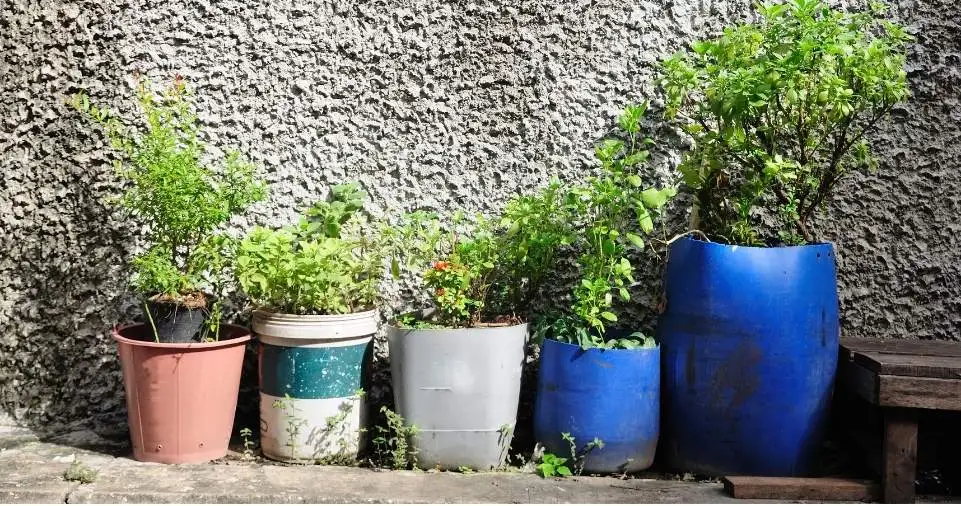

⚡ Quick Answer: A 15 gallon pot is roughly 17 inches tall and 16 to 18 inches wide at the top, holding about 11 to 14 actual U.S. gallons (1.6 to 2 cubic feet) of soil. The label is a trade gallon, not a true U.S. gallon, so the pot is typically 25 to 30 percent smaller than its name suggests.
You bought a tree at a nursery tagged “15 gallon” and now you need a saucer, a wheeled dolly, and enough potting mix to fill it. The problem: every spec sheet gives a different number. Some sites say 18″ wide, others 16″. Soil bags say 1.5 cubic feet, the calculator says 2. After eight years building plant and product size guides for BusinessComputingWorld, here is the part most articles skip — the size you read on the tag is not the size you actually buy.
A standard 15 gallon nursery pot measures 16 to 18.25 inches across the top, 14 to 15 inches across the base, and 16 to 18 inches tall, depending on whether the manufacturer made a tall or squat profile. The HC Companies injection-molded NSR015G0, one of the most widely used commercial models in North America, specs out at 16.75 inches outside diameter, 17.63 inches tall, 2,570 cubic inches of capacity, and a maximum liquid hold of 11.10 actual U.S. gallons. The Haviland HP1500, the other industry workhorse, measures 18.2 inches in diameter, 16 inches tall, and approximately 13.66 actual gallons. The gap between the label “15 gallon” and the real volume comes from the trade gallon convention defined by the American Nursery and Landscape Association, where one trade gallon equals three U.S. liquid quarts — three-quarters of an actual gallon.
Exact Dimensions of a 15 Gallon Pot (in Inches and Centimeters)
A 15 gallon pot measures 16 to 18.25 inches in diameter at the top, 14 to 15 inches at the base, and 16 to 18 inches in height. In centimeters, that’s roughly 40 to 46 cm wide and 41 to 46 cm tall. The exact dimensions depend on the manufacturer and whether the pot is a tall or squat profile, but the volume sits in the same range across all standard 15 gallon containers.
Two factors create the spread you see on spec sheets. The first is the tall-versus-squat trade-off: a tall 15 gallon pot typically runs 17 inches tall by 16 inches wide, while a squat 15 gallon runs 14 inches tall by 18 to 19 inches wide. Both hold the same nominal trade-gallon volume, but they distribute it differently — and that changes which plants thrive in them. The second factor is whether the listed diameter is the inside rim or the outside lip. Outside measurements include wall thickness and read 0.5 to 1 inch larger.
Here is what the major commercial nursery pots actually measure:
| Manufacturer / Model | Top Diameter | Height | Bottom Diameter | Actual Volume |
| HC Companies NSR015G0 (injection) | 16.75″ (42.55 cm) | 17.63″ (44.75 cm) | ~14″ | 11.10 gal / 42.10 L |
| Haviland HP1500 (Reach Supplies) | 18.2″ (46.2 cm) | 16″ (40.6 cm) | ~14.5″ | 13.66 gal / 51.71 L |
| XY Inc. 15-gal Resin (Tall) | 15.98″ (40.6 cm) | 17.13″ (43.5 cm) | ~13.5″ | 11.41 gal / 43.26 L |
| Hummert PC-15 (Side Drain) | 14.5″ (36.8 cm) | 18″ (45.7 cm) | ~12″ | 11.10 gal / 42.02 L |
| Haviland 1500 Series (Growers Outlet) | 18.25″ (46.4 cm) | 16.25″ (41.3 cm) | 14.25″ (36.2 cm) | ~13.5 gal |
| OTTULUR 15-Gal (Walmart consumer) | 17.9″ (45.5 cm) | 15″ (38.1 cm) | 14.2″ (36.1 cm) | ~12 gal |
Notice the range: top diameters span from 14.5 inches (Hummert’s narrow side-drain model) all the way to 18.25 inches (Haviland’s wider squat profile). For most landscaping and home garden purposes, picturing 17 inches across and 17 inches tall lands you in the middle of the range. The same dimensional thinking applies when sizing other objects — knowing how big 17 inches is in real life gives you a useful mental ruler before you ever pull out a tape measure.
How Much Soil Does a 15 Gallon Pot Actually Hold?
A 15 gallon pot holds approximately 1.6 to 2 cubic feet of potting soil, which equals 11 to 15 dry U.S. gallons or 45 to 60 dry quarts. In liters, that’s about 42 to 55 liters of dry mix. Plan to buy slightly more than the pot’s nominal volume to account for settling and watering headspace.
The soil math for a 15 gallon pot starts with one fact: one cubic foot of soil equals 7.48 U.S. liquid gallons, so 15 actual gallons would need 2.0 cubic feet. But because nursery containers use trade gallons (3 quarts each, not 4), a 15 gallon trade pot holds closer to 11.25 actual gallons — which works out to 1.5 cubic feet of soil to fill it. Real-world manufacturer specs confirm this: HC Companies lists the NSR015G0 at 2,570 cubic inches, which converts to 1.49 cubic feet. A standard 1.5 cubic foot bag of premium potting mix from Miracle-Gro, Espoma, or FoxFarm fills exactly one 15 gallon pot with minimal leftover. Add 10 to 15 percent more for settling, root displacement, and the watering gap below the rim.
Quick soil shopping rule
If the bag says 2 cubic feet, one bag fills one 15 gallon pot with a small surplus. If the bag says 1.5 cubic feet, plan on one bag per pot with maybe a quart short — buy two bags for two pots and you’ll have leftover for top-ups. If the bag is measured in quarts, you need roughly 45 to 50 dry quarts per 15 gallon pot. The University of Maryland Extension recommends potting mix (not garden soil) for container plantings of this size because compacted garden soil drains poorly and starves roots of oxygen in larger volumes.
Don’t make the mistake I see at every garden center in spring: buying “topsoil” or “garden soil” for a 15 gallon container. Those products are formulated for in-ground beds. In a pot this large, they compact under their own weight within two months, the drainage holes clog, and the plant suffocates. Use a peat- or coir-based potting mix with perlite, period.
Why a 15 Gallon Pot Isn’t Actually 15 Gallons (The Trade Gallon Problem)
A 15 gallon nursery pot does not hold 15 actual U.S. gallons. It holds 11 to 14 — usually around 11.5. The reason is the trade gallon, a horticultural industry convention where one trade gallon equals three U.S. liquid quarts, or 0.75 actual gallons. The Wikipedia entry on trade gallons traces this to a math convenience: 10 trade gallons equals exactly one cubic foot of soil, which is the standard unit potting mix is sold in.
Translated to consumer terms: when you buy a “15 gallon” tree at the nursery, you’re getting roughly 75 percent of what the name implies. The American Nursery and Landscape Association (now AmericanHort) standardized container designations like #15 or “15-gal trade” precisely because the industry needed a shorthand, but the labels are referenced to plant size class — not the pot’s liquid capacity. A #1 nursery container holds about 0.7 gallons. A #15 holds about 11 to 12. The ratio is consistent.
| Trade Designation | Marketing Name | Actual Volume (U.S. gal) | Typical Diameter |
| #1 | 1 gallon | 0.7 – 0.8 gal | 6″ – 7″ |
| #3 | 3 gallon | 2.3 – 2.9 gal | 10″ – 11″ |
| #5 | 5 gallon | 3.6 – 4.7 gal | 10.5″ – 13″ |
| #7 | 7 gallon | 6.0 – 7.5 gal | 12″ – 15″ |
| #10 | 10 gallon | 8.0 – 11.1 gal | 14.75″ – 18.5″ |
| #15 | 15 gallon | 11.0 – 14.0 gal | 16″ – 18.25″ |
| #20 | 20 gallon | 15.0 – 18.0 gal | 18″ – 21″ |
| #25 | 25 gallon | 20.0 – 24.0 gal | 21″ – 24″ |
This is why the size matters more than the label. If a recipe or planting guide tells you “use a 15 gallon container,” what they actually mean is “give the roots about 1.5 cubic feet of soil and a 16-to-18 inch growing zone.” The Royal Horticultural Society publishes specific minimum container volumes for fruit trees and large vegetables, and their container growing guide works off real soil volume, not trade-gallon labels.
What Can You Grow in a 15 Gallon Pot? (Plants, Trees, and Vegetables)
A 15 gallon pot is the workhorse of container gardening — large enough for full-size tomato plants, dwarf fruit trees, mature shrubs, and root vegetables that need depth. Texas A&M AgriLife Extension specifically recommends a 15 gallon container over a 5 gallon for tomatoes, noting it produces a more productive plant with less watering. The minimum interior dimensions (about 16 inches wide by 17 inches deep) match the root spread for most container-friendly varieties at maturity.
Best plants for a 15 gallon pot
- Indeterminate tomatoes (one plant per pot). 15 gallons is the recognized sweet spot per horticulturists at Bright Lane Gardens and Urban Farm and Kitchen; smaller pots reduce yield, larger ones waste soil and water.
- Dwarf citrus — Meyer lemon, key lime, kumquat. The tree will need up-potting to 25 gallons after 3 to 4 years, but a 15 starts a 2-to-3-year-old whip nicely.
- Blueberries (one or two plants). The wider squat 15 gallon profile suits their shallow, fibrous root system.
- Peppers, eggplant, and full-size cucumbers — one or two plants per pot.
- Dwarf fruit trees (apple, peach, fig) under 4 years old. After that, move to 20 or 25 gallons.
- Ornamental shrubs: hydrangea, dwarf butterfly bush, rosemary trained as a small tree.
- Bamboo (clumping varieties only — never running bamboo in a 15 gal, it will deform the pot in one season).
Trees sold in 15 gallon containers at California nurseries are typically 2 to 3 inches in trunk caliper and 7 to 12 feet tall, with a canopy spread of 4 to 6 feet at the time of sale. That’s a useful purchase reference: if a landscape designer specs “15 gallon trees,” expect mature-looking specimens that establish in your yard within one season, not the twiggy 1 gallon stock that takes 4 years to fill in.
What you should NOT grow in a 15 gallon pot
Skip full-size shade trees (oak, maple, sycamore — they need 25 gallons minimum and ideally ground planting). Skip aggressive spreaders like mint, running bamboo, or horseradish in a 15 gallon unless you’re committed to root-pruning every year. And skip shallow-rooted annuals like petunias or marigolds — they don’t need that much soil volume, and you’ll waste mix and water. Reserve 15 gallon pots for plants that genuinely use the depth.
15 Gallon Pot Weight: What It Weighs Empty, Full, and Filled With Soil
An empty 15 gallon plastic nursery pot weighs 1.5 to 3 pounds. Once filled with dry potting mix, the same pot weighs 50 to 70 pounds. After watering, a saturated 15 gallon container weighs 80 to 110 pounds — heavy enough that moving it without a wheeled dolly or hand truck risks back injury or a cracked pot rim.
The weight breakdown matters for two practical reasons: deck loading and movability.
| State | Weight Range | What This Means |
| Empty (plastic) | 1.5 – 3 lb | Easy single-hand carry |
| Empty (ceramic / terracotta) | 15 – 30 lb | Two-hand carry, awkward |
| Filled with dry mix | 50 – 70 lb | One-person lift with effort, use proper form |
| Filled with saturated mix | 80 – 110 lb | Two-person move or wheeled dolly |
| Filled + mature tree (15 gal trade) | 100 – 150 lb | Wheeled dolly mandatory |
If you’re putting 15 gallon pots on a balcony, second-story deck, or rooftop garden, check the load rating before you commit. Most residential balconies in U.S. building code support 40 to 60 pounds per square foot of live load. A saturated 15 gallon pot concentrates 100 pounds onto roughly 1.5 square feet of pot footprint — that’s 67 pounds per square foot, exceeding many balcony ratings. Put it on a wheeled plant caddy to distribute weight, and never group three or more 15 gallon pots in a tight cluster on lightweight decking.
For perspective on how much weight that 100-plus pounds represents in practical terms, picture a fully loaded carry-on suitcase plus a bag of cement — and you have to move that combined load every time you want to rearrange the patio. The wheeled plant caddy that costs $15 at any hardware store pays for itself the first time you need to chase the sun.
15 Gallon Pot vs. Other Common Sizes: A Visual Comparison
Plant retailers and landscape contractors size up between #5, #7, #10, #15, #20, and #25 containers — and the jumps aren’t proportional to the name. A #15 holds roughly twice the soil of a #7, but only 75 percent of a #20. Knowing how the sizes compare in actual dimensions helps you choose right the first time.
| Pot Size | Typical Diameter | Typical Height | Actual Soil Volume | Best For |
| 5 gallon | 10 – 11″ | 10 – 12″ | 3.6 – 4.7 gal | Determinate tomatoes, peppers, herbs |
| 7 gallon | 12 – 14″ | 11 – 14″ | 6 – 7.5 gal | Single small shrubs, dwarf citrus starts |
| 10 gallon | 14 – 16″ | 11 – 13″ | 8 – 11 gal | Mid-size shrubs, indeterminate tomatoes (minimum) |
| 15 gallon | 16 – 18″ | 16 – 18″ | 11 – 14 gal | Full-size tomatoes, dwarf trees, blueberries |
| 20 gallon | 18 – 21″ | 17 – 19″ | 15 – 18 gal | Mature shrubs, larger fruit trees |
| 25 gallon | 21 – 24″ | 18 – 22″ | 20 – 24 gal | Established trees, multi-plant containers |
The most useful visual anchor: a 15 gallon pot is about the size of a kitchen trash can — slightly wider, slightly shorter than the standard 13-gallon kitchen pail you already own. If you can picture your kitchen bin, you can picture a 15 gallon nursery pot. Same volume class, different proportions.
Container sizing is one of those measurements where the gap between the label and reality matters constantly — the same way understanding how big 18 inches is in everyday objects helps you visualize furniture and luggage without a tape measure. Real anchor objects beat raw numbers every time.
Should You Buy a 15 Gallon Pot? The Plant-Space-Weight Decision Framework
Before you spend $15 to $40 on a 15 gallon container and another $25 on soil to fill it, run through three questions: plant fit, space fit, and weight fit. If any of them fails, size down to a 10 gallon or up to a 20 gallon.
| Decision Factor | Choose 15 Gallon If… | Choose Different Size If… |
| Plant fit | Mature plant needs 1.5+ cu ft soil; tomato, dwarf tree, shrub | Plant is annual or shallow-rooted (size down); plant is mature shade tree (size up) |
| Space fit | You have a 20″ × 20″ footprint with 24″ headroom for plant | Floor space is under 18″ wide (use squat profile or size down) |
| Weight fit | Surface supports 100+ lb concentrated load, or you have a plant caddy | Second-floor balcony rated under 50 psf and you’re clustering pots |
| Watering fit | You can water deeply 2 – 4 times per week in summer | You’re away from home 4+ days at a stretch (use self-watering system or smaller pot) |
| Budget fit | Container + soil + plant under your project budget ($60 – $100 total) | Bulk-buying: at 6+ pots, switch to bulk soil delivery instead of bagged |
The framework above is what I use when I’m building out a small balcony garden or repotting client landscapes — and it catches the costly mistakes early. The most common one: buying a 15 gallon pot for a determinate “patio tomato” variety. Those plants top out at 3 to 4 feet and only need a 5 to 7 gallon pot. The extra soil sits unused, dries out unevenly, and actually makes the plant more vulnerable to overwatering. Match the pot to the plant, not the plant to the pot.
Frequently Asked Questions About 15 Gallon Pot Size
How many inches wide is a 15 gallon pot?
A 15 gallon pot is typically 16 to 18 inches wide at the top, depending on whether it’s a tall or squat profile. Tall 15 gallons run 16 inches wide by 17 inches deep; squat 15 gallons run 18 inches wide by 14 to 15 inches deep. Both hold the same trade-gallon volume.
How much soil do I need for a 15 gallon pot?
You need approximately 1.5 to 2 cubic feet of potting mix to fill a 15 gallon pot, which equals 45 to 60 dry quarts or about 42 to 55 liters. One standard 1.5 cubic foot bag of premium potting mix fills one 15 gallon container with very little leftover. Buy slightly more to account for settling after watering.
How big is a tree in a 15 gallon container?
A tree sold in a 15 gallon nursery container is typically 2 to 3 inches in trunk caliper, 7 to 12 feet tall, and has a 4 to 6 foot canopy spread at the time of sale. Landscape designers commonly spec 15 gallon trees as the entry point for instant-impact plantings, since they look mature on day one but cost a fraction of 25 gallon specimens.
Is a 15 gallon pot too big for one tomato plant?
No — a 15 gallon pot is the recommended minimum size for indeterminate tomato varieties according to Texas A&M AgriLife Extension and most horticultural extension services. It produces a more productive plant with less frequent watering than a 5 or 10 gallon container. Determinate (bush) varieties can manage in 5 to 7 gallons, but indeterminate vines genuinely need the 15 gallon volume to reach full yield.
What is the difference between a 15 gallon pot and a 15 gallon grow bag?
A 15 gallon plastic pot and a 15 gallon fabric grow bag hold the same nominal soil volume (about 1.5 to 2 cubic feet), but fabric grow bags are typically 16 to 17 inches in diameter and 12 to 14 inches tall — wider and shorter than rigid pots. Grow bags also air-prune roots, which produces a denser root mass, but they dry out 25 to 40 percent faster than plastic pots in summer heat.
Final Word on 15 Gallon Pot Sizing
A 15 gallon pot is 16 to 18 inches across, 16 to 18 inches tall, holds 11 to 14 actual U.S. gallons (about 1.5 to 2 cubic feet of soil), and weighs 80 to 110 pounds when filled and watered. The label is a trade designation, not a true volume — plan for roughly 75 percent of what the name implies.
Three concrete next steps: measure the spot where the pot will live (you need 20 inches of footprint and 24 inches of vertical headroom for the plant), pick up one 1.5 to 2 cubic foot bag of quality potting mix per pot, and grab a $15 wheeled plant caddy before you fill it. The caddy is the single best investment in this entire setup — it turns a back-straining 100-pound move into a one-hand push, and it lets you chase sunlight, dodge storms, and rearrange the patio without a second person.
Now you know exactly what you’re buying when the tag says “15 gallon.” The next time a landscape contractor or nursery catalog throws that number at you, you’ll know to picture a 17 by 17 inch container, 11.5 actual gallons of root space, and a hundred-pound move.
