
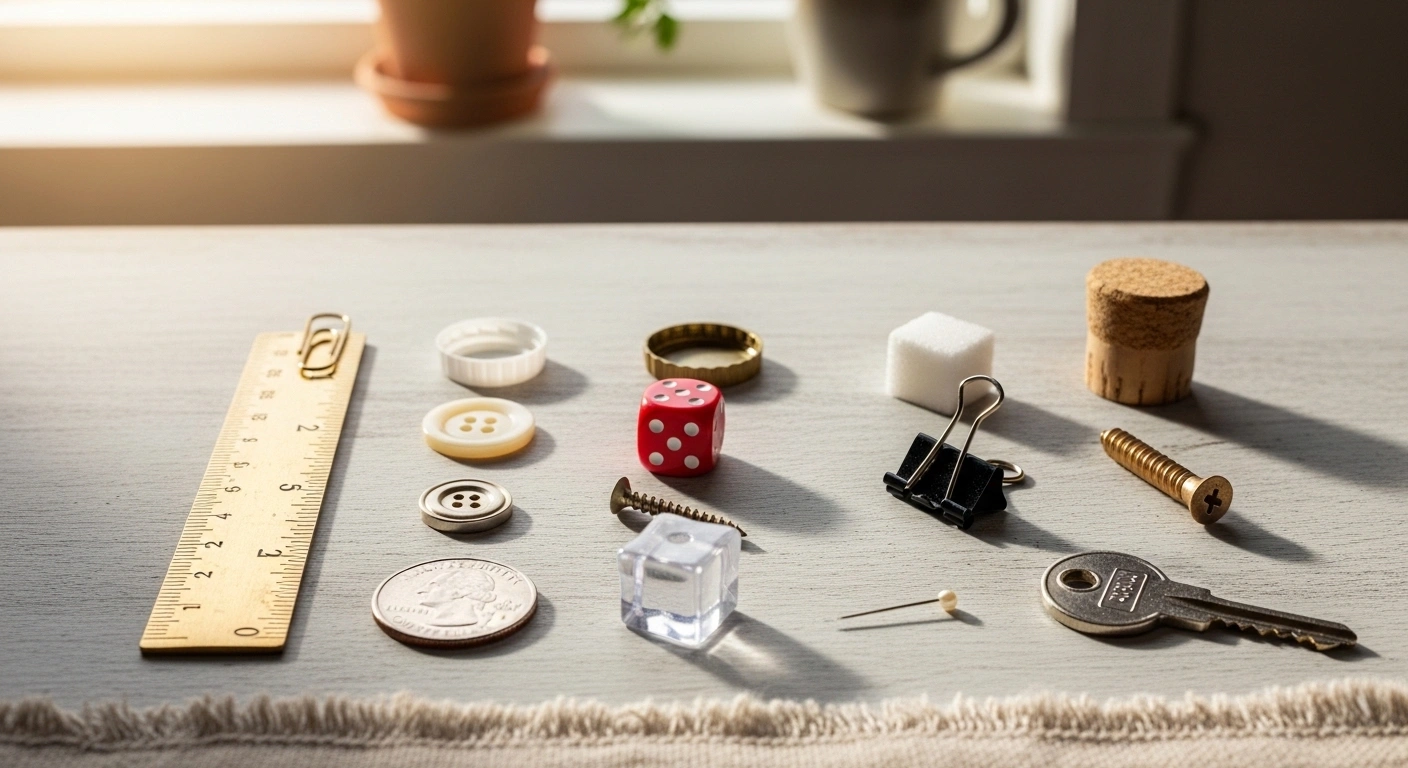

You’re staring at a product listing that says “1 inch thick,” and you have no clue whether that’s paper-thin or chunky. You’re not alone — and this guide exists to fix that permanently.
An inch equals exactly 2.54 centimeters (25.4 millimeters) and represents one-twelfth of a foot. That precise number — 2.54 cm — was internationally agreed upon in 1959, making it one of the few imperial measurements with a clean metric definition. At Business Computing World, we’ve spent years breaking down technical concepts for professionals and curious learners, and few measurements cause more quiet confusion than this one.
By the end of this guide, you’ll know how long an inch is in every practical context — from eyeballing it with your own hand to converting it for international projects. More importantly, you’ll understand why the inch works the way it does, and how to measure one accurately even without tools nearby.
How Long Is an Inch in Exact Measurements?
One inch is a unit of length in the imperial and U.S. customary measurement systems, defined as exactly 25.4 millimeters. This definition, established by the International Yard and Pound Agreement of 1959, standardized the inch across the United States, United Kingdom, Canada, Australia, and New Zealand.
Here’s what 1 inch converts to across every common unit:
| Unit | 1 Inch Equals |
|---|---|
| Centimeters | 2.54 cm |
| Millimeters | 25.4 mm |
| Feet | 0.0833 ft (1/12) |
| Yards | 0.0278 yd (1/36) |
| Meters | 0.0254 m |
But here’s what most people miss: knowing the number and knowing the size are two different skills. You can memorize “2.54 cm” and still have zero ability to eyeball an inch in real life. That’s where physical reference points become essential.
How to Visualize an Inch Without a Ruler
Think of your thumb. For most adults, the distance from the tip of the thumb to the first knuckle joint is remarkably close to one inch. This isn’t a coincidence — the word “inch” itself comes from the Latin uncia (meaning “one-twelfth”), and historical inch definitions were literally based on body parts.
Here are the most reliable no-tool methods to estimate one inch:
- Thumb tip to first knuckle — Works for roughly 80% of adults. Check yours against a ruler once, and you’ll know your personal “thumb inch” forever.
- U.S. quarter diameter — A quarter measures 0.955 inches across. That 0.045-inch difference is invisible to the naked eye.
- Standard paperclip length — The small (not jumbo) paperclip measures almost exactly one inch end-to-end.
- Bottle cap diameter — Most plastic water and soda caps are within a hair of 1 inch across.
The thumb method is the most powerful because it travels with you everywhere. In 14th-century England, King Edward II reportedly standardized the inch as the length of three barleycorns laid end to end. Your thumb is a better tool — and you don’t need to carry grain in your pocket.
12 Common Objects That Are About 1 Inch Long
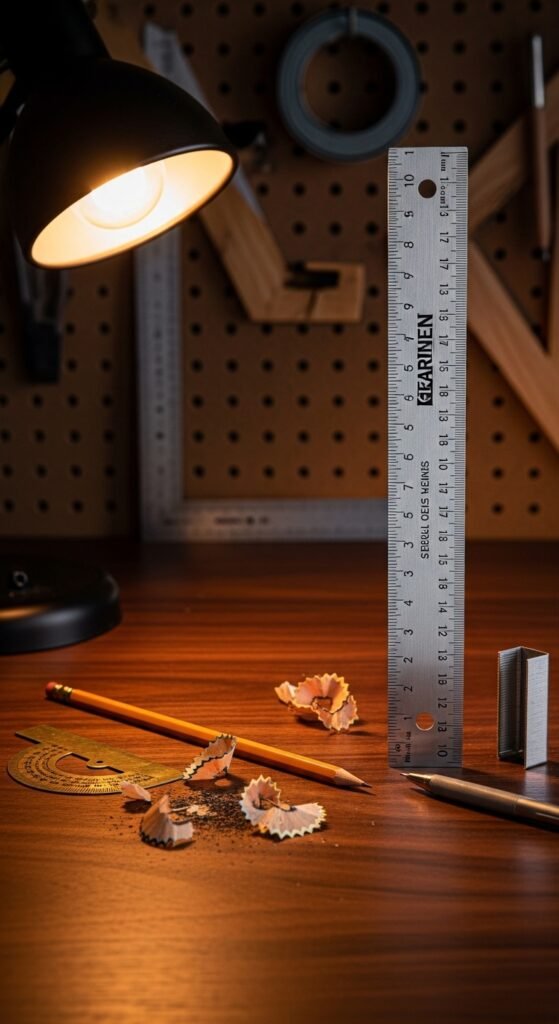
Knowing the conversion is useful. Recognizing the size is practical. These everyday objects give you instant 1-inch references you can use anywhere.
| Object | Approximate Measurement | Accuracy |
|---|---|---|
| U.S. quarter (diameter) | 0.955 in | ~96% |
| Standard paperclip | 1.0 in | ~100% |
| Bottle cap (diameter) | 1.0 in | ~99% |
| Adult thumb width | 0.9–1.1 in | ~90% |
| Standard die (one side) | 0.63 in (casino) to 1.0 in (board game) | Varies |
| Coat button (diameter) | 0.75–1.0 in | ~85% |
| Hockey puck height | 1.0 in | ~100% |
| Small binder clip width | 0.75–1.0 in | ~85% |
| Standard ice cube side | 1.0–1.25 in | ~90% |
| 1-inch wood screw length | 1.0 in (by definition) | 100% |
| Keyboard Ctrl key width | ~1.0 in | ~95% |
| Sugar cube side | 0.5–1.0 in | Varies by brand |
Here’s what most articles won’t tell you: not all of these are equally reliable. A U.S. quarter, a hockey puck, and a standard paperclip are manufactured to tight tolerances — they’ll be consistently close to 1 inch every time. Dice, buttons, and sugar cubes vary significantly by brand and type. If you need a trustworthy pocket reference, stick with the quarter or keep a single paperclip in your wallet.
The Inch in Professional Settings: Where Precision Matters
The inch isn’t just a curiosity — it’s a workhorse measurement in several industries. And in professional contexts, “about an inch” isn’t good enough. Here’s where inch precision genuinely matters:
Screen technology. When Samsung or Apple advertises a 6.7-inch display, they’re measuring the diagonal in inches. Display resolution is measured in PPI (pixels per inch), which directly determines image sharpness. A 326 PPI Retina display packs 326 individual pixels into every linear inch.
Construction and woodworking. Lumber dimensions in the U.S. are specified in inches, though here’s a misconception worth busting: a “2×4” board doesn’t actually measure 2 inches by 4 inches. After milling and drying, it measures 1.5 × 3.5 inches. This catches DIYers off guard constantly.
Plumbing and hardware. Pipe diameters, screw sizes, and nail lengths all use inch-based measurements in the U.S. A 1-inch wood screw is exactly that — one inch from tip to head. Mixing up metric and imperial fasteners can compromise structural integrity, which is why hardware stores in the U.S. keep these systems strictly separated.
Sewing and textiles. Seam allowances are typically 5/8 inch in American pattern-making. Garment sizing, particularly for waist, inseam, and collar measurements, relies on quarter-inch and eighth-inch precision.
This raises a question worth sitting with: Are you working in a field where “close enough” actually isn’t? If so, invest in a quality ruler or digital caliper. Your thumb is fine for hanging a picture frame. It’s not fine for machining a part.
How to Read a Ruler in Inches (The Skill Most People Skip)
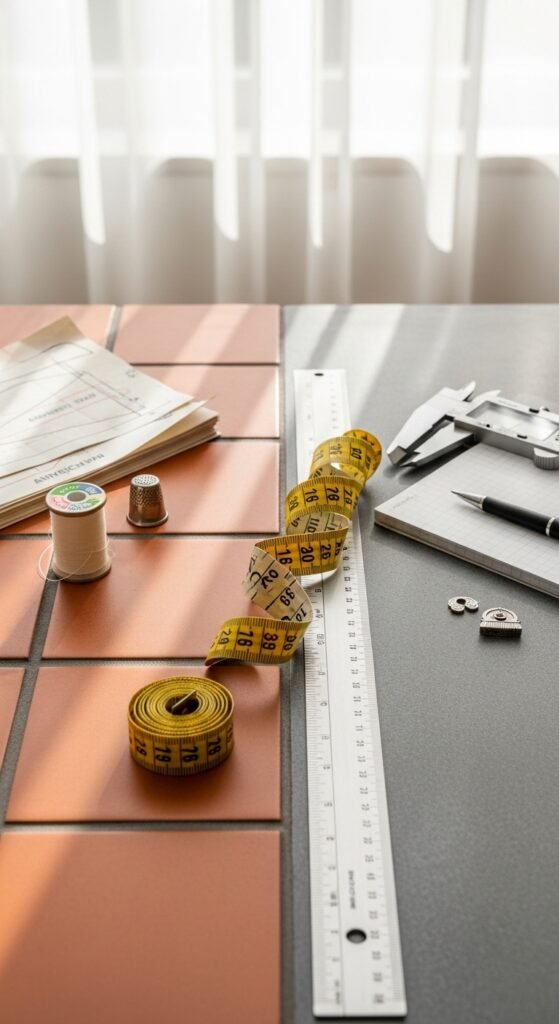
An inch on a standard ruler is divided into progressively smaller fractions, and reading these fractions is where most measurement confusion starts.
Here’s the hierarchy of markings on a typical inch ruler:
- Longest line — The inch mark itself (1″, 2″, 3″…)
- Second longest — Half-inch (1/2″)
- Third longest — Quarter-inch (1/4″ and 3/4″)
- Fourth longest — Eighth-inch (1/8″, 3/8″, 5/8″, 7/8″)
- Shortest lines — Sixteenth-inch (1/16″ increments)
The trick is counting from the last whole inch. If your measurement falls two small lines past the 3-inch mark, and those lines represent sixteenths, you’re at 3 and 2/16 inches — which simplifies to 3-1/8 inches.
Common misconception: Many people assume every ruler subdivision represents the same increment. They don’t. The varying line lengths are the visual code — shorter lines mean smaller fractions. Once you internalize this pattern, reading a ruler becomes second nature.
A Brief History of the Inch (And Why It’s 2.54 cm)
The inch has one of the messiest histories of any measurement unit. For centuries, different countries — and even different regions within countries — used their own definition.
The Roman uncia was one-twelfth of a Roman foot. But Roman feet varied. In medieval England, the inch was defined as the length of three dried barleycorns placed end to end — a definition that King Edward II codified around 1324. The problem? Barleycorns aren’t uniform. One farmer’s inch was slightly different from another’s.
Scotland, France, and Spain each had their own inch equivalents. The French pouce (roughly 2.71 cm) was notably larger than the English inch. This created trade confusion for centuries.
The resolution came in 1959 when six nations — the U.S., UK, Canada, Australia, New Zealand, and South Africa — signed the International Yard and Pound Agreement, fixing the inch at exactly 25.4 millimeters. One clean number. No more barleycorns.
But here’s what most people don’t realize: the U.S. technically uses two slightly different inches. The standard “international inch” (25.4 mm) is used for general purposes, but the “U.S. survey inch” (approximately 25.400051 mm) was used in land surveying until the National Institute of Standards and Technology (NIST) officially deprecated it on January 1, 2023. The difference — about 2 parts per million — only mattered for surveying large tracts of land. For anything you’ll ever do at home or in the office, the international inch is the only one you need.
Inches vs. Centimeters: When to Use Which
If you work internationally or buy products from overseas manufacturers, you’ll constantly toggle between inches and centimeters. Here’s a practical framework:
Use inches when:
- Working with U.S.-manufactured products
- Reading American construction plans or hardware specs
- Discussing screen sizes (globally standardized in inches)
- Buying clothing in the U.S., UK, or Canada
Use centimeters when:
- Working with most international products
- Following scientific or medical specifications
- Communicating measurements to metric-system audiences
- Doing any calculation where decimal precision helps (metric’s base-10 system is simpler to compute)
Quick conversion shortcuts:
- 1 inch ≈ 2.5 cm (close enough for rough estimates)
- 4 inches ≈ 10 cm (useful for visualizing)
- 12 inches (1 foot) ≈ 30 cm
For exact conversions, multiply inches by 2.54. For the reverse, divide centimeters by 2.54.
Why the U.S. Still Uses Inches (And What That Means for You)
Only three countries haven’t officially adopted the metric system: the United States, Myanmar, and Liberia. Yet the inch persists in American daily life for a simple economic reason — switching would cost billions.
According to a 1999 study cited by NIST, converting U.S. road signs alone would cost an estimated $300 million to $600 million (in 1990s dollars). Multiply that across every industry — construction, manufacturing, aerospace, textiles — and the price tag becomes staggering.
This means if you live in or do business with the U.S., inches aren’t going away in your lifetime. The practical move isn’t to complain about imperial measurements — it’s to get genuinely comfortable with them.
Frequently Asked Questions About Inches
Q: How long is an inch on my finger?
A: For most adults, the width of the thumb at its widest point or the length from thumb tip to first knuckle approximates one inch. This varies by hand size — measure your own thumb against a ruler once to calibrate your personal reference.
Q: Is an inch the same in every country?
A: Since 1959, yes. The international inch is exactly 25.4 millimeters worldwide. Before that agreement, different countries used slightly different definitions. The only exception was the U.S. survey inch, which NIST deprecated in 2023.
Q: How many inches are in a foot?
A: Twelve inches equal one foot. This 12:1 ratio dates back to Roman measurement systems, where the uncia represented one-twelfth of a pes (foot).
Q: What common objects are exactly 1 inch?
A: The most reliable 1-inch references are a standard paperclip (length), a U.S. quarter coin (diameter at 0.955″), a plastic bottle cap (diameter), and a 1-inch wood screw (by definition). Your thumb tip-to-knuckle distance is also close for most adults.
Q: Why don’t inches use the decimal system?
A: Inches are divided into fractions (halves, quarters, eighths, sixteenths) because the imperial system predates widespread adoption of decimal notation. The metric system, developed during the French Revolution in the 1790s, was deliberately designed around base-10 for easier calculation.
Q: Can I measure inches on my phone screen?
A: Several free apps (like “Ruler” on iOS and “Smart Ruler” on Android) use your phone’s screen calibration to display accurate inch measurements. However, accuracy depends on your phone model’s screen specifications — always verify against a physical ruler first.
Q: How do I convert inches to centimeters quickly?
A: Multiply by 2.54 for exact conversion, or multiply by 2.5 for a fast mental estimate that’s within 2% accuracy. For example, 4 inches × 2.5 = 10 cm (actual: 10.16 cm).
What to Do Next
You now understand how long an inch is — mathematically, visually, and historically. Here’s how to put that knowledge to work:
- Calibrate your thumb. Grab a ruler right now, measure from your thumb tip to your first knuckle, and memorize how your personal “thumb inch” compares to the real thing. This single action gives you a portable measurement tool for life.
- Keep a reference object handy. Tuck a paperclip or quarter into your wallet or desk drawer. When you need to estimate an inch in the wild — at a hardware store, while shopping online, during a craft project — you’ll have an instant visual check.
- Practice reading ruler fractions. If you regularly work with measurements, spend five minutes practicing eighth-inch and sixteenth-inch readings. The people who struggle with measurements aren’t lacking intelligence — they’re lacking practice with fraction markings. Five minutes of deliberate practice eliminates years of guesswork.
