
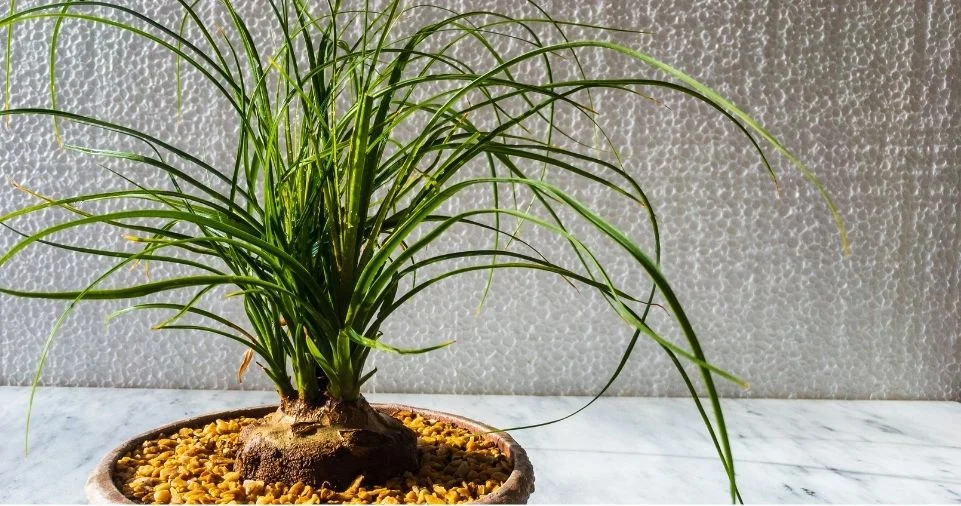

⚡ Quick Answer: How big do ponytail palms get? Indoors, ponytail palms (Beaucarnea recurvata) typically reach 3 to 6 feet over 10 to 15 years. Outdoors in USDA zones 10 to 11, mature specimens climb 12 to 18 feet, with rare landscape giants pushing 26 to 30 feet and a caudex base spreading up to 7 feet across.
You bought a foot-tall ponytail palm in a 6-inch pot and now you’re wondering if it’s going to outgrow your apartment, your patio, or your entire backyard. Bad sizing decisions get expensive fast — a $40 houseplant that hits 8 feet needs a new pot, new spot, and sometimes a new ceiling. After ten years of tracking succulent growth data across indoor and outdoor settings, here’s what the size actually looks like.
Beaucarnea recurvata is not a true palm. The University of Florida IFAS Extension classifies it in the Asparagaceae family — closer to agaves and yuccas than to coconut palms — which explains why its growth math diverges from every palm guide you’ll read. Mature height is governed by three measurable inputs: container volume (root restriction throttles vertical extension), photoperiod (it needs 6+ hours of direct light to push new caudex tissue), and minimum temperature (sustained exposure below 25°F halts growth for months). Indoor specimens average 2 to 4 inches of annual height gain. Outdoor specimens in coastal Southern California or south Florida add 4 to 6 inches per year and routinely reach 12 to 18 feet within 25 to 35 years. The bulbous trunk base, called a caudex, can swell to 7 feet across in landscape settings according to UF/IFAS — and that lateral spread, not height, is what most buyers underestimate.
Mature Size at a Glance: Indoor vs. Outdoor
Here are the verified size ranges across the two settings where ponytail palms live. Indoor figures assume a healthy specimen in a standard 10 to 14-inch pot with bright light. Outdoor figures assume USDA zones 10 to 11, well-drained soil, and at least 25 years of uninterrupted growth.
| Setting | Mature Height | Caudex Width | Time to Maturity |
| Indoor (typical) | 3 to 6 feet | 8 to 14 inches | 10 to 15 years |
| Indoor (rare ceiling) | 6 to 10 feet | 18 to 24 inches | 20 to 30 years |
| Outdoor (suburban landscape) | 10 to 18 feet | 3 to 5 feet | 25 to 35 years |
| Outdoor (mature native) | 20 to 30 feet | 5 to 7 feet | 40+ years |
To translate the caudex width into something you can actually picture, think of the base of a mature ponytail palm as roughly the diameter of a small bistro table — the lateral spread can match the dimensions you’d find at 20 inches across on a young plant, then double that for landscape specimens. This is the dimension most buyers ignore at purchase and regret at year fifteen.
How Tall Do Ponytail Palms Get Indoors?
Indoor ponytail palms reach a typical mature height of 3 to 6 feet, with the absolute ceiling sitting around 8 to 10 feet in homes with exceptional light. The North Carolina State Extension plant toolbox lists indoor height at 6 to 8 feet and width at 3 to 5 feet as the realistic upper range for containerized specimens. HGTV’s plant care guide reports an even tighter range — 1 to 3 feet tall and 1 to 4 feet wide for plants kept in small, shallow containers with drainage. The discrepancy comes down to pot size. A specimen held in a 10-inch pot for its entire life rarely clears 4 feet, while the same plant moved up two pot sizes every four years can double that. Indoor growth averages 2 to 4 inches per year, meaning a 12-inch nursery plant takes roughly a decade to reach 4 feet.
What Slows or Speeds Indoor Growth
- Light intensity: 6+ hours of bright direct or near-direct sun drives the fastest indoor growth; low-light corners stall vertical extension entirely.
- Pot size: Each upsize of 2 inches in diameter unlocks roughly 6 to 10 inches of additional growth over the following 24 months.
- Watering frequency: Overwatering causes root rot and stalls the plant for a full growing season; the caudex visibly softens before the plant declines.
- Temperature stability: Daytime swings beyond ±8°F slow growth; aim for 60 to 85°F year-round with humidity above 25%.
- Fertilizer: A diluted balanced fertilizer once monthly during spring and summer adds 1 to 2 inches per year over an unfertilized baseline.
How Big Do Ponytail Palms Get Outdoors?
Outdoor ponytail palms in USDA hardiness zones 10 to 11 reach a mature height of 12 to 18 feet according to the University of Florida IFAS Extension, with mature spread between 10 and 15 feet. Bob Vila’s care guide notes that landscape specimens occasionally exceed 20 feet with a caudex 5 or more feet across and leaves 4 feet long. The San Diego Zoo’s botanical reference places average mature height at 12 to 18 feet, with tropical-climate specimens climbing to 30 feet. Wikipedia’s species record cites 350-year-old Beaucarneas registered in Mexico with caudex girths up to 14 meters in the wild. For practical planning in a suburban landscape, expect 10 to 14 feet of height after 30 years even in ideal zone 10b conditions — the genuine 25 to 30-foot specimens are botanical garden anchors, not backyard plants.
Hardiness Zone Cutoffs That Matter
Ponytail palms tolerate brief dips to 25°F but sustained exposure below freezing kills the caudex. The UF/IFAS Gardening Solutions guide for ponytail palm pins reliable hardiness at zones 10A through 11. Some growers report successful overwintering in zone 9B with frost protection. In zones 8 and below, treat the plant as a container specimen that comes inside before the first frost — outdoor planting will not survive winter.
Spacing matters as much as zone. A mature outdoor specimen needs a planting hole twice the width of its root ball and a clear 10 to 15-foot radius for the leaf cascade — measured at full extension, those leaves can be nearly a foot and a half long on indoor plants, stretching to four feet on mature outdoor specimens.
Gardenia’s species profile documents leaves reaching up to 6 feet long on the largest landscape specimens — long enough that pedestrian paths within the canopy radius become a planning concern by year twenty.
How Fast Do Ponytail Palms Grow?
Ponytail palms grow slower than nearly every common houseplant. The San Diego Zoo botanical record states ponytail palms grow less than one foot per year. Indoors, expect 2 to 4 inches of annual height gain — slower in low light, slower still during winter dormancy. The caudex thickens by 0.5 to 1 inch in diameter per year under optimal conditions. Outdoor specimens in zones 10 to 11 add 4 to 6 inches of height per year and roughly 1 to 2 inches of caudex diameter.
| Growth Stage | Indoor Annual Gain | Outdoor Annual Gain (Zones 10-11) |
| Years 1 to 5 (juvenile) | 1 to 3 inches | 3 to 5 inches |
| Years 5 to 15 (vegetative) | 2 to 4 inches | 4 to 6 inches |
| Years 15+ (mature) | 0 to 2 inches | 2 to 4 inches |
| Caudex diameter (annual) | 0.5 to 1 inch | 1 to 2 inches |
Here’s why that matters: a $30 nursery plant marked “2 feet tall” will not be 6 feet next year. Plan for a decade of patience between nursery purchase and floor-to-ceiling presence. If a fast-growing statement plant is the goal, a ponytail palm is the wrong species — choose a fiddle leaf fig or a bird of paradise instead.
The Container–Light–Climate Matrix: Predict Your Plant’s Final Size
Most guides hand you a single size range and walk away. The real answer depends on three controllable inputs — container size, light hours, and climate zone — that combine multiplicatively. Use this matrix to predict the realistic 10-year size of your specific plant in your specific home.
| Container | Light (hours direct) | Setting / Zone | 10-Year Height |
| 6 to 8 inch pot | Under 4 hours | Indoor, any zone | 1.5 to 2.5 feet |
| 10 to 12 inch pot | 4 to 6 hours | Indoor, any zone | 2.5 to 4 feet |
| 14 to 18 inch pot | 6+ hours | Indoor, sunroom | 4 to 6 feet |
| 20 inch+ planter | Full outdoor sun | Patio, zone 9b–11 | 5 to 8 feet |
| In-ground | Full outdoor sun | Landscape, zone 10–11 | 8 to 14 feet |
The matrix exposes a counterintuitive truth: a plant in a 10-inch pot under 6 hours of light will outpace the same plant in a 14-inch pot under 4 hours of light. Light intensity beats container volume when sun hours fall below the 6-hour threshold. This is why north-facing apartments produce stunted ponytails regardless of pot upgrades.
The Caudex Question: Width Matters More Than Height
The bulbous trunk base is what gives the plant its other name, elephant foot tree, and it’s the dimension most size guides skip. The University of Florida IFAS Extension reports caudex widths up to 7 feet on mature landscape specimens. HGTV’s plant care guide cites caudex spreads up to 12 feet across in very large containers or in-ground installations. Wikipedia’s species record notes wild specimens with caudex girths reaching 14 meters.
For indoor planning, caudex width grows in step with pot diameter — expect 0.5 to 1 inch of additional caudex diameter per year, plateauing at roughly 8 to 14 inches across in standard residential containers. Outdoors, the caudex thickens faster than the plant gains height after year 10. A 20-year-old landscape specimen might be only 8 feet tall but carry a caudex 3 to 4 feet wide. This is the trade-off no one tells you about: ponytail palms get fat before they get tall.
Why the Caudex Spreads Instead of Climbing
Restricted roots trigger hormonal signals that inhibit apical meristem activity, redirecting energy into lateral caudex expansion. In a pot, this is the plant’s drought-adapted physiology choosing water storage over height. The result: indoor specimens develop disproportionately broad bases relative to their height, which is exactly the sculptural look most buyers want.
When repotting, give the caudex room. A pot should leave roughly an inch between the trunk and the rim — a clearance about the width of three inches across the diameter gives the caudex the next 3 to 4 years of expansion before the next upsize.
How to Control or Limit Ponytail Palm Size
You cannot top-prune a ponytail palm into a smaller plant. Removing leaves doesn’t reduce height — it just removes leaves. Size control happens at the root, not the crown. The three working levers are container restriction, light limitation, and watering frequency. A seven-inch difference in pot diameter between consecutive upsize cycles is the practical sweet spot for owners who want measured growth without stalling the plant entirely.
Strategies That Actually Work
- Keep it pot-bound: hold a specimen in the same pot for 5 to 7 years to plateau height; the plant tolerates root restriction better than nearly any houseplant.
- Skip the upsize: when repotting becomes necessary, go up only 1 to 2 inches in pot diameter rather than 3 to 4, slowing growth by roughly 40%.
- Reduce fertilizer: cutting the monthly feed to once per quarter slows annual height gain by 30 to 50% with no harm to the plant.
- Move to lower light: shifting from a south-facing window to east-facing reduces growth without damaging the plant; pure north exposure stalls it entirely.
Strategies That Don’t Work
- Topping the crown: cutting the growing tip produces multiple branches and a wider, messier plant — not a shorter one. Total height stays roughly the same.
- Withholding water: drought stress damages the caudex without limiting eventual height; the plant resumes growth as soon as watering returns.
- Root pruning: aggressive root cuts cause months of stalled growth followed by stress sprouts; net effect on final size is minimal and the plant may not recover.
Pot Sizing Guide for Every Growth Stage
Match the pot to the current plant size and your target height. Going too big at any stage causes water retention problems and slows growth, the opposite of what most owners assume.
The jump from a standard 14-inch pot to a 20-inch planter is the biggest single transition most owners face. A 19-inch diameter is the practical threshold where moving the pot starts to require two people, soil volume roughly triples, and the plant can finally push beyond the 6-foot mark indoors.
| Plant Height | Pot Diameter | Pot Depth | Repot Window |
| Under 12 inches | 4 to 6 inches | 4 to 5 inches | Every 2 to 3 years |
| 12 to 24 inches | 6 to 8 inches | 5 to 6 inches | Every 3 years |
| 2 to 4 feet | 10 to 12 inches | 7 to 9 inches | Every 3 to 4 years |
| 4 to 6 feet | 14 to 18 inches | 10 to 12 inches | Every 4 to 5 years |
| 6+ feet | 20+ inches | 12+ inches | Every 5+ years or in-ground |
Drainage matters more than aesthetic. Every pot needs at least one bottom drainage hole — better, several. Decorative cachepots without drainage are fine as outer sleeves only. For a sense of how the typical 4-inch nursery pot diameter scales upward through the plant’s life, a mature container specimen needs roughly five times that diameter at year fifteen.
Frequently Asked Questions
Three myths drive most of the bad ponytail palm sizing decisions. First, the “slow growth” reputation gets exaggerated — outdoor specimens in proper zones add measurable height each year. Slow doesn’t mean static. Second, the species is not a true palm; it sits in the asparagus family, which is why it follows succulent growth patterns rather than palm patterns. Third, topping does not control height — it only changes shape. The questions below address the size questions buyers ask most often.
How big does a ponytail palm get in a 10-inch pot?
A ponytail palm held in a 10-inch pot typically reaches 3 to 4 feet of total height across 15 to 20 years. The pot restricts root expansion, which throttles vertical growth — even a 30-year-old plant in a 10-inch pot rarely exceeds 4 feet.
How long does it take a ponytail palm to grow 6 feet tall?
Indoors with bright light and proper repotting, expect 20 to 30 years to reach 6 feet. Outdoors in USDA zones 10 to 11, the same height is reachable in 12 to 18 years. The first 2 feet take 5 to 7 years; growth accelerates slightly between years 8 and 15 before plateauing.
Can a ponytail palm get too big for indoors?
Yes, but rarely. Indoor specimens that exceed 8 feet need ceiling clearance for the cascading leaf crown, which can spread 3 to 5 feet wide. If the plant’s height exceeds 75% of your ceiling height, plan for relocation rather than restriction — donate to a botanical garden or move to a sunroom.
Will a ponytail palm grow taller if I move it outside?
Only if you live in USDA zone 9b or warmer and plant it in-ground. Moving a potted ponytail palm to a patio for the summer does not unlock significant new growth. The size gains come from in-ground root expansion combined with sustained full sun, not from temporary outdoor placement.
How wide does the caudex of a ponytail palm get?
Indoor caudex width plateaus at 8 to 14 inches across in standard containers. Outdoor landscape specimens reach 3 to 5 feet in suburban settings — for reference, the lower end of that range is roughly four times the width of a 15-inch object. Mature native specimens in southeastern Mexico can develop caudexes up to 7 feet across according to UF/IFAS Extension records.
Final Sizing Guidance
How big do ponytail palms get? The honest answer is: as big as your container, light, and climate allow — and slower than you expect. For most indoor owners, plan for a 4 to 6-foot specimen across 15 years. For outdoor growers in zones 10 to 11, plan for 12 to 18 feet across 30 years, with the caudex eventually spreading 3 to 5 feet wide.
Before you buy: measure your space twice. Note the ceiling height, the floor footprint you can spare, and the available daily light hours. Match those numbers to the Container–Light–Climate Matrix above. If your 10-year projected size fits the space with 30% margin, buy the plant. If it doesn’t, choose a smaller succulent — a dwarf variety, a haworthia, or a snake plant will give you sculptural form without the eventual size problem.
One more thing worth saying: the ponytail palm is a 100-year plant. A Royal Horticultural Society Award of Garden Merit listing confirms what experienced growers know — buy it for the long game, treat it patiently, and the slow growth becomes the feature, not the flaw.
Note: Plant care recommendations vary by climate. Verify hardiness zones with your local extension office before outdoor planting, and consult a certified arborist for size reduction beyond routine leaf maintenance.
