
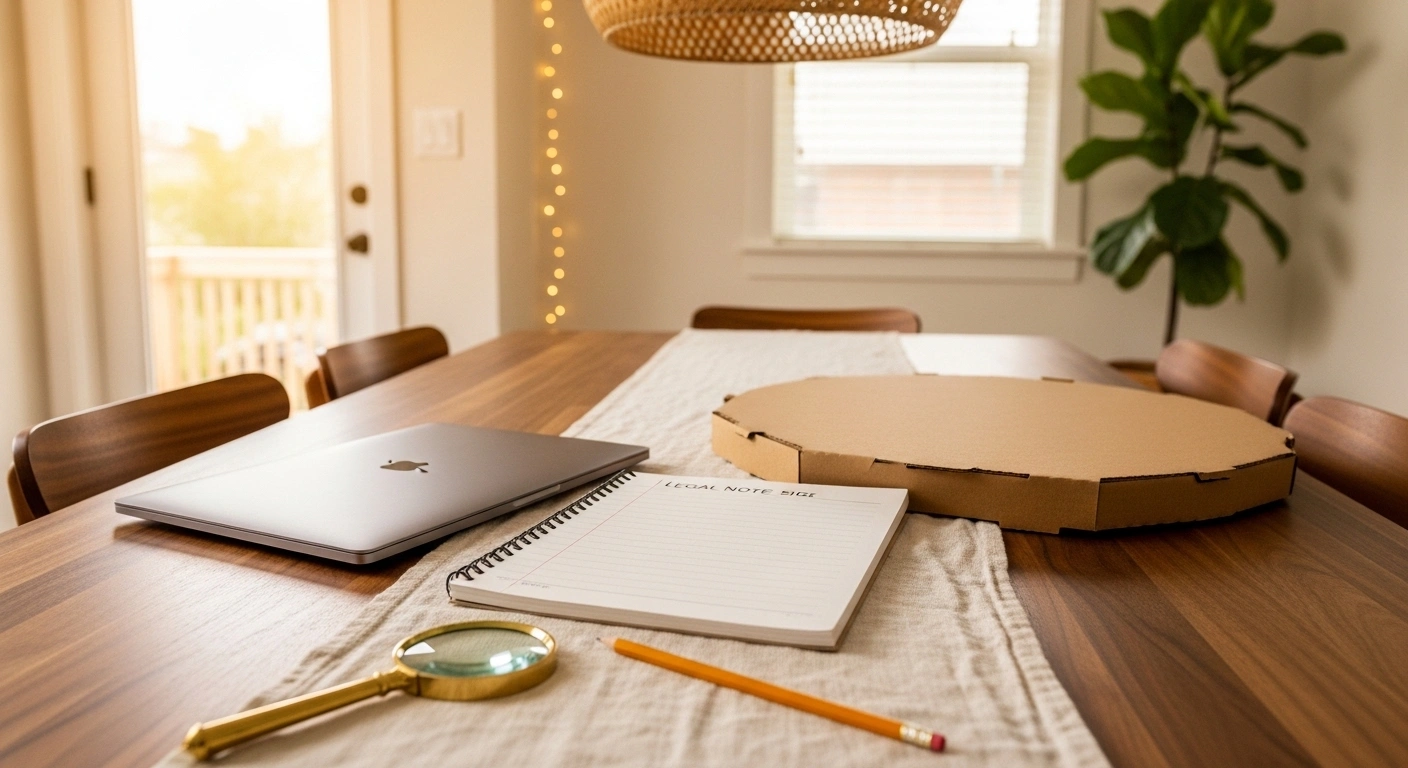

Fourteen inches equals 35.56 centimeters, or just slightly longer than a standard 12-inch ruler. Picture a sheet of legal paper held lengthwise, a large pizza, or the diagonal of a 14-inch laptop screen. Each one lands right at that 14-inch mark.
You searched this because a product listing or project plan threw “14 inches” at you. Your brain drew a blank.
Numbers without context feel useless. You need to judge whether something fits a shelf, a bag, or a wall. One reliable mental picture solves the problem forever.
Fourteen inches is a measurement equal to 1.17 feet, 35.56 centimeters, or 355.6 millimeters, calculated using the internationally defined standard where one inch equals exactly 2.54 centimeters. In the United States, legal-size paper measures exactly 8.5 × 14 inches, making its long edge a precise real-world reference for this length. A 14-inch laptop screen — measured diagonally from corner to corner, not across the width — represents the most common consumer encounter with this dimension in 2026. The measurement sits in a practical middle ground: long enough to cover a full keyboard width yet compact enough to fit inside a standard backpack. Manufacturers across electronics, food packaging, and home décor rely on 14 inches as a size that balances usability with portability, which explains why it appears so often in product specifications.
How Big Is 14 Inches in Centimeters, Feet, and Other Units?
Fourteen inches converts to 35.56 centimeters. That number comes from multiplying 14 by 2.54, the exact conversion factor between inches and centimeters.
Here’s how 14 inches translates across every common unit:
| Unit | 14-Inch Equivalent |
|---|---|
| Centimeters | 35.56 cm |
| Millimeters | 355.6 mm |
| Feet | 1.17 ft |
| Meters | 0.3556 m |
| Yards | 0.389 yd |
Feet give the fastest mental shortcut. One foot equals 12 inches. Fourteen inches adds two extra inches beyond that one-foot mark.
Metric users can think of 14 inches as roughly 35.5 centimeters. A standard A4 sheet of paper is 29.7 cm long. Fourteen inches stretches about 6 cm past that familiar A4 edge.
For anyone working with meters, 14 inches sits just above one-third of a meter. Builders and DIYers who switch between imperial and metric systems hit this conversion constantly.
What Does 14 Inches Actually Look Like?
Most size guides throw 15 random objects at you. That approach overwhelms instead of helping. A better strategy uses what your brain already does well: tie measurements to places you know.
Pick one anchor object per location you spend time in. Your kitchen anchor is a sheet of legal paper — its long side measures exactly 14 inches.
Your desk anchor is a tenkeyless keyboard, which runs about 14 inches wide. Your pocket anchor is four credit cards laid end to end, reaching roughly 13.5 inches.
Memorize just one of those three. The next time you need to judge 14 inches, your brain already has a reference stored in the right context.
A standard 12-inch ruler gets you most of the way there. Hold one up, then mentally add about two finger-widths past the end. That gap represents the extra two inches beyond a one-foot benchmark.
Fourteen inches falls between compact and spacious. A 12-inch object feels like “one foot, nothing special.”
A 16-inch object starts feeling bulky. Fourteen inches sits in the comfortable middle — functional without being awkward.
How Big Is a 14-Inch Laptop Screen in 2026?
A 14-inch laptop screen measures 14 inches diagonally — from one corner of the display to the opposite corner. The actual width of the screen is closer to 12 inches, and the height is around 8 inches.
That diagonal measurement surprises first-time buyers. The laptop doesn’t look 14 inches wide because it isn’t. Screen size always refers to the diagonal line, not the horizontal edge.
As of 2026, the 14-inch category has become one of the most popular laptop sizes on the market. The Apple MacBook Pro M5 and Dell 14 Plus dominate this size class.
Both appear near the top of PC Guide’s 2026 laptop rankings. Battery life on newer 14-inch models has pushed past 20 hours.
The 14-inch screen balances workspace and portability. A 13-inch display feels slightly cramped for split-screen work.
A 16-inch screen adds weight and bulk for travel. The 14-inch size threads that needle.
Shoppers who see “14-inch laptop” in a listing can picture this: a legal paper sheet held sideways. The screen’s diagonal matches that paper’s long edge almost exactly.
Kitchen and Office Objects That Measure 14 Inches
Real objects beat abstract numbers every time. These four items sit within arm’s reach in most homes and offices.
Legal-size paper measures 8.5 × 14 inches. The long edge is exactly 14 inches — no rounding, no approximation.
Legal paper originated from historical “foolscap” paper sizes used in European courts. Grab a sheet from any office supply drawer, and you’re holding the most precise 14-inch reference available.
A large pizza typically measures 14 inches across its diameter. Walk into most Domino’s or Pizza Hut locations, and the “large” option hits that 14-inch mark. More on the surprising math behind pizza sizing below.
A chef’s knife with blade and handle combined often reaches 14 inches total. The blade runs about 8 inches, close to common 8-inch kitchen items. The handle adds another 5 to 6 inches.
A tenkeyless (TKL) keyboard — the compact layout that drops the number pad — measures roughly 14 inches across. The Logitech G Pro and similar 80% keyboards hit this width consistently. Glance down at your desk for an instant size check.
How Big Is a 14-Inch Pizza Compared to Other Sizes?
A 14-inch pizza is much bigger than it sounds. Most people underestimate pizza sizes because they think in diameter, not area.
Pizza area follows a simple circle formula: π × radius². Here’s what that math reveals:
| Pizza Size | Diameter | Area (sq inches) | Compared to 14-inch |
|---|---|---|---|
| Small | 10 inches | 78.5 sq in | 50% of a 14-inch |
| Medium | 12 inches | 113 sq in | 73% of a 14-inch |
| Large | 14 inches | 154 sq in | — |
| Extra Large | 16 inches | 201 sq in | 131% of a 14-inch |
A 14-inch pizza delivers 36% more food than a 12-inch. Those two extra inches of diameter add 41 square inches of pizza.
That’s almost half a 10-inch dinner plate worth of extra food. Two 10-inch personal pizzas total 157 square inches, while one 14-inch large gives you 154 square inches. You get nearly identical food from a single large — usually at a lower price.
Next time you order, remember: diameter grows linearly, but area grows exponentially. A “two inches bigger” pizza is actually a much bigger pizza.
How to Eyeball 14 Inches Without a Ruler
You won’t always have a tape measure handy. These pocket-friendly tricks work anywhere.
Four credit cards end to end. Every credit card worldwide follows the ISO/IEC 7810 ID-1 standard, measuring 3.375 inches long. Lay four cards in a straight line, and you reach 13.5 inches — about half an inch short of 14.
Close enough for furniture shopping or wall décor placement.
A U.S. quarter has a diameter of 0.955 inches according to U.S. Mint specifications. Line up 15 quarters edge to edge, and you hit 14.3 inches.
Two hand spans offer the roughest estimate. An average adult hand span — thumb tip to pinky tip, fully stretched — measures about 7 to 8 inches. Two spans placed back to back land between 14 and 16 inches.
A dollar bill plus a smartphone. A U.S. dollar bill measures 6.14 inches long. Most modern smartphones run between 6 and 6.7 inches tall.
Lay them end to end for roughly 12 to 13 inches total. Add what a single inch looks like on each end to close the gap.
Does Your Forearm Actually Equal 14 Inches?
Several measurement guides online claim that an adult forearm — elbow to wrist — measures about 14 inches. That number is wrong for most people.
According to a 2012 anthropometric survey, the average male forearm length is 10.5 inches (26.7 cm). The average female forearm length is 9.5 inches (24.0 cm). Neither comes close to 14 inches.
Even at the 95th percentile, male forearms max out around 12 inches. You’d need extraordinarily long limbs — well above 6’4″ in height — for a forearm to approach 14 inches.
Here’s where the confusion likely started. Some guides mix up forearm length with forearm circumference.
The average male forearm circumference (the distance around the thickest part) runs about 12 inches. Muscular adults can hit 14 inches in circumference. Length and circumference are completely different measurements.
Use your forearm for rough 10-inch estimates instead. For 14 inches, stick with legal paper or a keyboard.
When 14 Inches Matters Most: Shopping, Building, and Decorating
Knowing how big 14 inches is becomes practical in three common situations.
Laptop and monitor shopping. A 14-inch laptop fits most backpacks, airline seat-back pockets, and café tables.
Buyers stepping up from a 13-inch model gain noticeable screen space without the weight penalty of 15-inch machines. Buyers stepping down from a 16 or 17-inch device trade screen area for portability.
Shelf and storage planning. A 14-inch-wide shelf holds standard legal binders, vinyl records in their sleeves, and most hardcover books with room to spare. Check your wall studs before mounting — 14 inches of loaded shelf weight needs solid support.
Home décor and framing. Art canvas frames commonly come in 14 × 11 or 14 × 18 configurations. A 14-inch-wide frame fills a small wall section without overwhelming the space.
Measure your wall opening first, then check whether the frame needs 14 inches of width or height. Mixing those two up is the most common hanging mistake.
14-inch throw pillows add visual balance to standard sofas without crowding the seating area. Two 14-inch pillows plus one 18-inch center pillow creates the classic “layered” look interior designers recommend.
Quick-Reference: 14-Inch Object Comparison Table
Bookmark this table for instant size checks:
| Object | Actual Size | How Close to 14 Inches? |
|---|---|---|
| Legal paper (long edge) | 14.0 in | Exact |
| Large pizza diameter | 14.0 in | Exact |
| TKL keyboard width | ~14.0 in | Within 0.2 in |
| 14-inch laptop diagonal | 14.0 in | Exact (diagonal) |
| Chef’s knife (full length) | ~14.0 in | Within 0.5 in |
| Charger dinner plate | ~13.0 in | 1 inch short |
| 4 credit cards lengthwise | 13.5 in | 0.5 inch short |
| 15 U.S. quarters in a row | 14.3 in | 0.3 inch over |
| Adult male forearm | ~10.5 in | 3.5 inches short |
| Vinyl record in sleeve | ~12.75 in | 1.25 inches short |
| Standard 12-inch ruler | 12.0 in | 2 inches short |
| Men’s size 12 shoebox | ~13.5 in | 0.5 inch short |
The top four items — legal paper, large pizza, TKL keyboard, and laptop screen — are your most reliable references. Each matches 14 inches within a fraction of an inch.
Objects marked “short” still help when combined with a mental gap estimate. A 6-inch reference plus an 8-inch item sitting side by side gives exactly 14 inches, for example.
Frequently Asked Questions
How many centimeters is 14 inches?
Fourteen inches equals exactly 35.56 centimeters. Multiply any inch measurement by 2.54 to convert to centimeters.
Is 14 inches bigger than a foot?
Yes. One foot equals 12 inches, so 14 inches is exactly two inches longer than one foot.
What paper size is exactly 14 inches long?
U.S. legal paper measures 8.5 × 14 inches. The long edge gives you a precise 14-inch reference without any rounding.
Is a 14-inch laptop considered big or small?
A 14-inch laptop sits in the mid-range between compact ultrabooks and full-size workstations. Most reviewers in 2026 classify 14-inch screens as the “sweet spot” for productivity and travel. Larger options like 18-inch laptops serve desktop-replacement roles instead.
How big is a 14-inch pizza in slices?
A 14-inch pizza typically gets cut into 8 to 10 slices and feeds 2 to 3 people. Its total area is 154 square inches — 36% more food than a 12-inch medium.
Can I use my forearm to measure 14 inches?
No. The average adult forearm (elbow to wrist) measures about 10 to 10.5 inches. Use legal paper or a keyboard for an accurate 14-inch estimate.
How does 14 inches compare to A4 paper?
A4 paper is 11.7 inches long. Fourteen inches is 2.3 inches longer than A4. Place both sheets side by side, and the difference is easy to spot.
What to Do Next
Fourteen inches equals 35.56 cm, 1.17 feet, and the exact length of a legal paper’s long edge. You now have a dozen objects to picture it and a pizza-math trick that saves money. Three pocket methods let you estimate it anywhere.
Pick the one anchor object that fits your life best. Use a legal pad in the office, a keyboard at your desk, or a pizza box at home as your 14-inch mental ruler.
Next time a product listing says “14 inches,” you won’t need to guess. You’ll know whether it fits your shelf, your bag, or your wall — because you’ve held that exact size before.
