

You’re standing in your backyard, planning a fence. Or you’re eyeing a room for new furniture. Someone says “10 meters” and you nod — but the number floats in your head without landing anywhere solid.
Ten meters equals 32.8 feet, 393.7 inches, or roughly 11 yards. That’s the textbook answer. But your brain doesn’t think in conversion formulas — it thinks in pictures. This guide gives you those pictures: 10 real-world objects and distances that make 10 meters something you can see, not just calculate.
We’ve measured, compared, and cross-referenced dimensions from manufacturer specs and sports governing bodies to build the most accurate set of visual references for this distance. By the end, you’ll estimate 10 meters confidently — no tape measure required.
10 Meters in Every Unit You’ll Need
Before the visuals, here’s the math — one clean table covering every conversion you might search for.
| Unit | 10 Meters Equals |
|---|---|
| Feet | 32.81 ft |
| Inches | 393.70 in |
| Yards | 10.94 yd |
| Centimeters | 1,000 cm |
| Millimeters | 10,000 mm |
| Kilometers | 0.01 km |
| Miles | 0.0062 mi |
Quick mental shortcut: Multiply meters by 3.3 to get feet. So 10 × 3.3 = 33 feet. Close enough for any practical estimate.
How Long Is 10 Meters? 10 Real-World Comparisons
Abstract numbers become concrete distances when you pin them to things you already know. Here are 10 objects and scenarios, organized from the most universally recognizable to the more specialized.
1. A City Bus — Almost Exactly 10 Meters
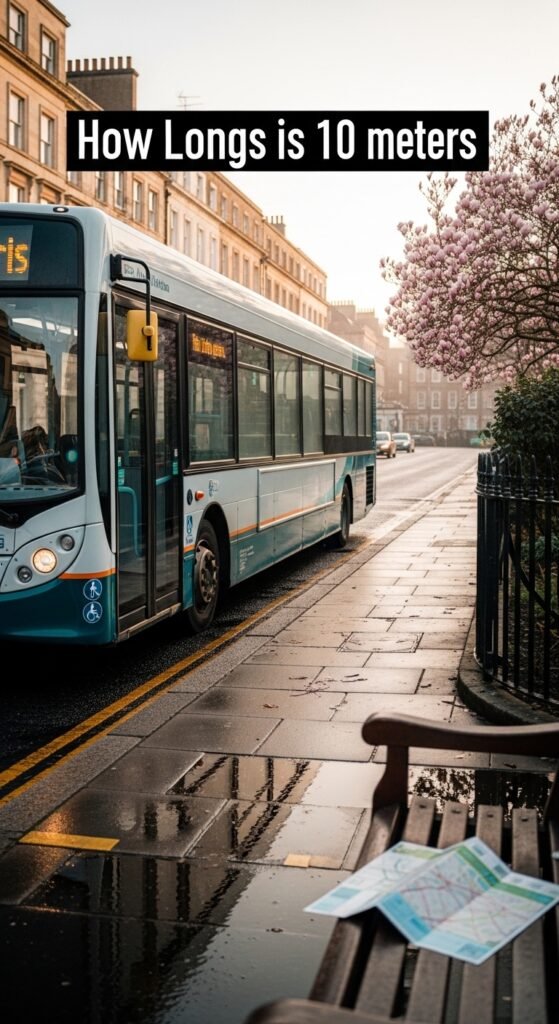
A standard single-decker city bus measures between 10.5 and 12 meters in length, depending on the model. That means a bus you see at any transit stop is almost a perfect ruler for 10 meters.
Next time one pulls up, look from bumper to bumper. That’s your distance.
2. A Three-Story Building — 10 Meters Tall
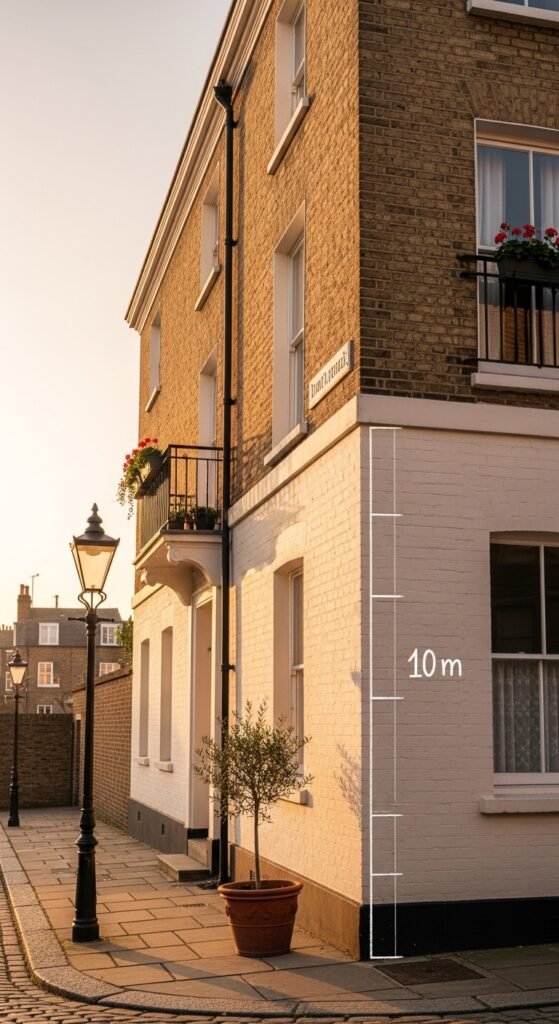
Each story of a residential building accounts for roughly 3 to 3.3 meters (including the floor slab and ceiling space). Stack three stories and you land right around 10 meters.
Look out your window at the nearest three-story apartment block or office. The distance from sidewalk to roofline? That’s 10 meters measured vertically.
3. The 10-Meter Diving Platform — Exactly 10 Meters
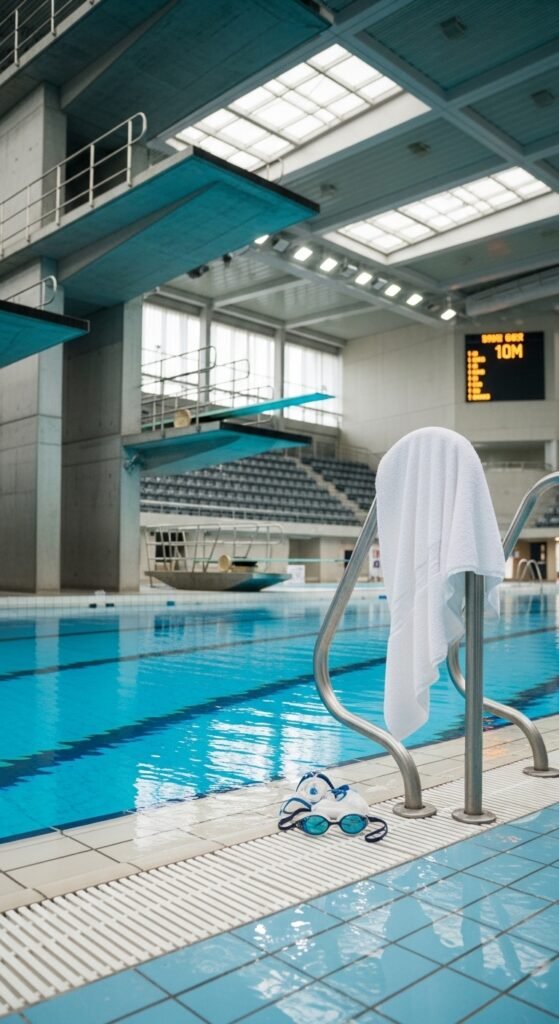
Olympic diving platforms are built to precisely 10 meters above the water surface, per FINA (now World Aquatics) regulations. If you’ve ever watched a diver stand at the edge of that platform and thought “that’s terrifyingly high” — you’ve seen exactly 10 meters.
This is the single most precise real-world example, because it’s engineered to that exact specification.
4. Your Own Steps — A Pacing Trick That Works Anywhere
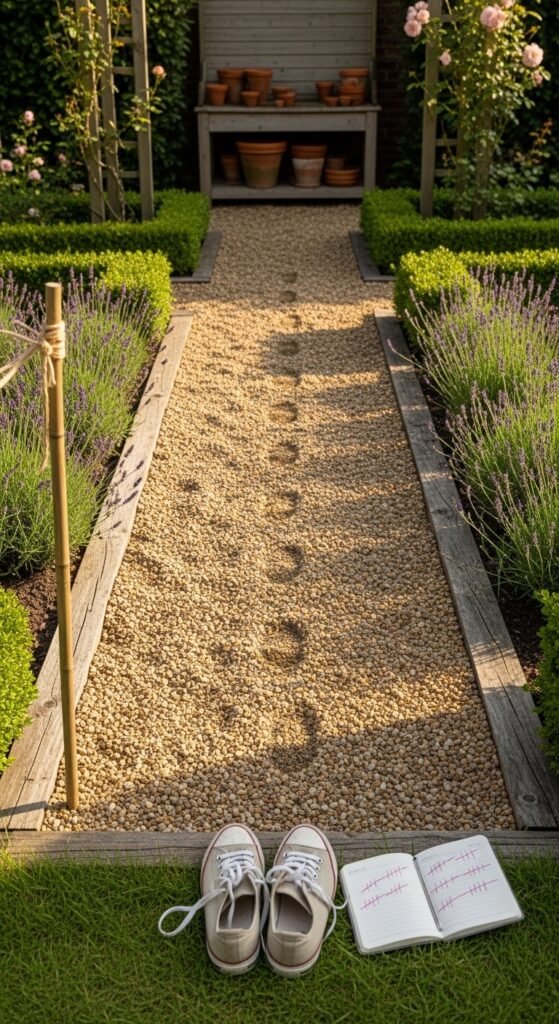
Here’s the most practical comparison of all: your stride.
An average adult walking stride covers about 0.7 to 0.8 meters. That means roughly 13 to 14 normal steps equal 10 meters. If you deliberately lengthen your stride to about 1 meter per step (a big, purposeful stride), then 10 big steps gets you there.
Try it right now. Stand up, take 13 normal steps, and mark where you end up. That’s 10 meters. Once you calibrate this in your body, you’ll never need to guess again.
This is how construction workers, coaches, and landscape designers rough-estimate distances on-site before pulling out measuring tools.
5. Two Midsize Sedans Parked Bumper-to-Bumper
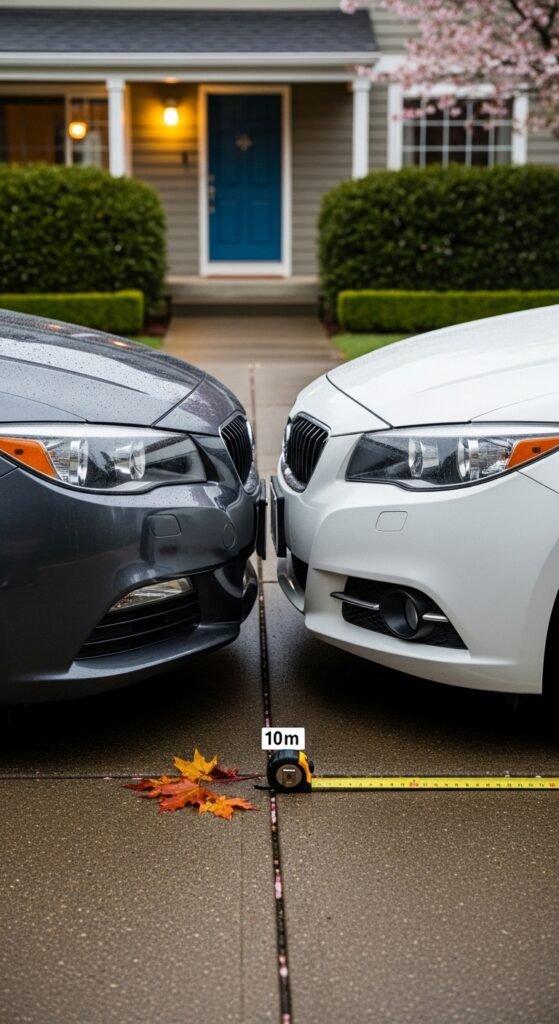
A 2024 Toyota Camry measures 4.88 meters long. A Honda Accord comes in at 4.97 meters. Park two of them nose-to-tail and you’re looking at approximately 9.8 to 10 meters.
Two sedans. That’s it. The next time you’re in a parking lot, find two cars in a row — the space they occupy is your reference.
6. Half a Cricket Pitch
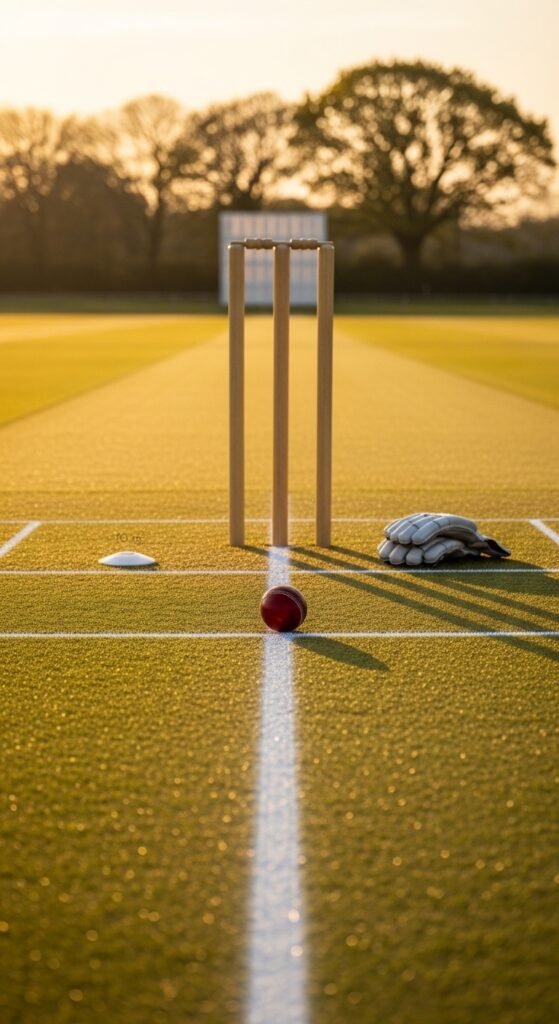
A regulation cricket pitch measures 22 yards (20.12 meters) between the two sets of stumps. Cut that in half and you get 10.06 meters — essentially exact.
For cricket fans, this is intuitive. Picture the bowler’s run-up to the crease. That distance — the space where the ball is released and travels to the batsman — is roughly 10 meters of pure athletic intensity.
7. A Telephone Pole’s Height
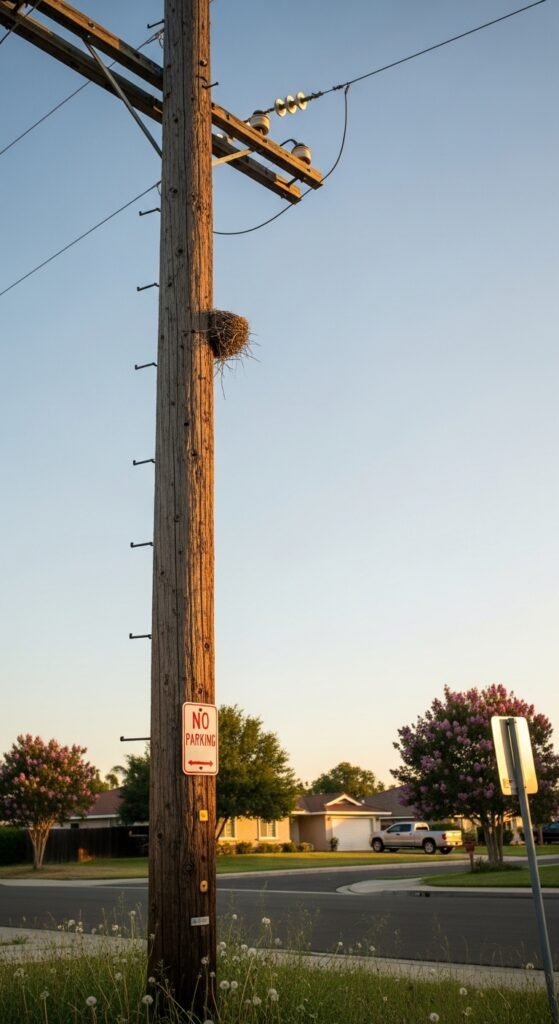
According to the Florida Public Service Commission, a standard wooden utility pole stands approximately 10.7 meters (35 feet) above ground. That’s remarkably close to 10 meters.
Look up at the nearest telephone pole. The distance from the base to the top? Roughly your number. This works in virtually any neighborhood, urban or rural.
8. Two-Thirds of a Basketball Court’s Width
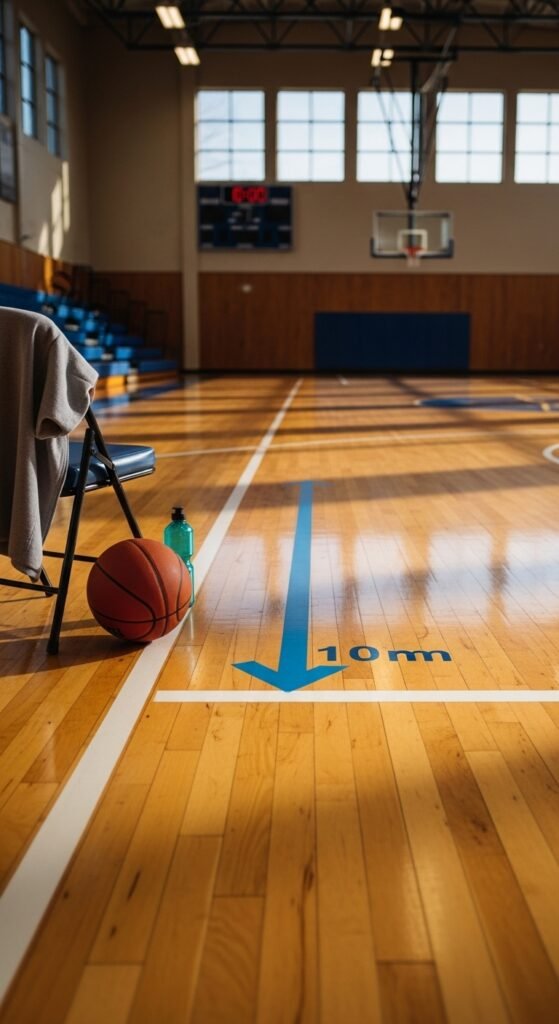
An NBA regulation basketball court is 15.24 meters (50 feet) wide, per NBA official rules. Two-thirds of that width — from one sideline to just past the free-throw lane — equals about 10 meters.
If you’ve ever stood on a basketball court and walked from one sideline toward the other, stopping about two-thirds across, you covered 10 meters.
9. The 10-Meter Air Rifle Shooting Distance
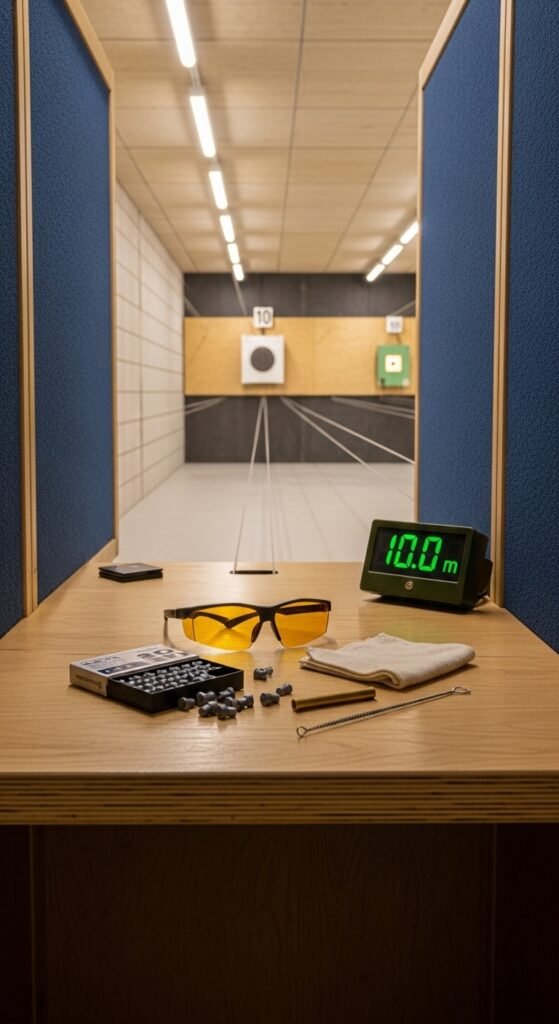
In Olympic shooting sports, the 10-meter air rifle and 10-meter air pistol events are fired at targets exactly 10 meters away, as specified by the International Shooting Sport Federation (ISSF). Athletes train for years to hit a target the size of a period on a printed page — from exactly this distance.
10. Four Standard Surfboards End-to-End

A standard shortboard surfboard measures approximately 6 feet (1.83 meters), while a longboard runs about 9 feet (2.74 meters). Using mid-range surfboards averaging 2.5 meters each, four boards placed end-to-end stretch to 10 meters.
This one is less universally applicable — but if you’re at the beach and need a reference, it works beautifully.
Why 10 Meters Matters: Practical Uses You’ll Actually Encounter
Understanding 10 meters isn’t just trivia. Here’s where this specific distance shows up in real decisions:
Home renovation and landscaping. Garden beds, fence runs, driveway lengths, and room dimensions frequently fall in the 8-to-12-meter range. Knowing what 10 meters looks like helps you eyeball whether a contractor’s estimate matches reality — before you sign anything.
Sports training. Sprint coaches use 10-meter splits to measure acceleration. Swimmers train 10-meter underwater distances off the wall. Soccer’s penalty area extends 16.5 meters from the goal line, with the penalty spot sitting 11 meters out — close to our number.
Safety regulations. Fire codes in many jurisdictions require emergency exits within a certain distance of any point in a building. Ten meters frequently appears in safety setback requirements, construction clearances, and signage visibility standards.
Travel and directions. “It’s about 10 meters ahead on your left” is a common instruction. If you can picture the distance instantly, you navigate faster and with less confusion.
The Misconception Most People Get Wrong
Here’s something almost every competitor article repeats incorrectly: “10 meters equals about 10 adult steps.”
That’s misleading. The average adult walking stride is 0.7 to 0.8 meters, not 1 meter. You’d need 13 to 14 natural steps to cover 10 meters. Only if you deliberately take large, exaggerated strides of about 1 meter each would 10 steps work — and most people don’t walk that way.
The difference matters if you’re pacing out a garden bed or estimating room dimensions. Using “10 steps = 10 meters” could leave you 2 to 3 meters short. That’s the width of a doorway you didn’t account for.
The fix: Take your normal steps, count 13 or 14, and you’ll be far more accurate.
How Long Is 10 Meters Compared to Common Distances?
| Distance | Meters | Relationship to 10 Meters |
|---|---|---|
| Width of a two-lane road | ~7 m | Slightly shorter |
| Standard bowling lane | 18.29 m | Almost double |
| Olympic pool length | 50 m | Five times longer |
| Tennis court length | 23.77 m | About 2.4× longer |
| American football first down | 9.14 m (10 yards) | Just under 10 meters |
| Cricket pitch | 20.12 m | Exactly double |
One comparison worth highlighting: a first down in American football is 10 yards — which equals 9.14 meters, NOT 10 meters. People confuse yards and meters constantly. Ten meters is about 9% longer than 10 yards. In a sport where inches decide games, that gap matters.
FAQ: How Long Is 10 Meters?
Q: How many feet is 10 meters exactly?
A: Ten meters equals 32.8084 feet. For everyday use, round to 32.8 feet or simply 33 feet. This is roughly the length of two midsize cars or the height of a three-story building.
Q: How long does it take to walk 10 meters?
A: At a normal walking pace of about 5 km/h (1.4 meters per second), covering 10 meters takes approximately 7 seconds. A brisk walker covers it in about 5 seconds. A sprinter? Under 2 seconds.
Q: Is 10 meters the same as 10 yards?
A: No. Ten meters equals 10.94 yards — about 9% longer than 10 yards. This difference is significant in sports, construction, and any precision work. Always verify which unit is being used before measuring.
Q: How can I measure 10 meters without a tape measure?
A: Use the pacing method: take 13 to 14 normal walking steps. For a quicker estimate, take 10 deliberately large strides. You can also use your arm span — most adults have an arm span roughly equal to their height (about 1.7 meters), so approximately six arm spans equal 10 meters.
Q: What common object is closest to exactly 10 meters?
A: The Olympic 10-meter diving platform is built to exactly 10 meters above the water surface, making it the most precise real-world reference. A standard city bus (10.5–12 meters) and a telephone pole (~10.7 meters) are close runners-up.
Q: How tall is 10 meters in stories?
A: Ten meters equals approximately three stories of a residential building. Each story typically measures 3 to 3.3 meters including the floor structure, so three stories reach 9 to 10 meters total.
Q: How does 10 meters compare to a school bus?
A: A full-size North American school bus measures 10.7 to 11.2 meters (35–37 feet). A smaller “short bus” runs about 6 to 7.6 meters. The full-size version is the closer match — just slightly over 10 meters.
What to Do Next
You now have 10 solid mental anchors for this distance. Here’s how to lock them in:
- Calibrate your stride today. Measure 10 meters with a tape measure or use a known 10-meter reference (a parking space is about 5.5 meters — walk two of them). Count your natural steps. Write the number down. That’s your personal pacing calibration.
- Pick your go-to reference. Choose the one comparison from this list that clicks most naturally for you — the bus, the three-story building, the diving platform — and commit it to memory.
- Practice spotting 10 meters in the wild. Next time you’re walking down the street, estimate which objects are 10 meters away, then check by pacing. Within a week, you’ll estimate distances within a meter without thinking about it.
