
You’re staring at a product listing that says “18 inches” and you have zero idea whether it’ll fit your shelf, your neck, or your kitchen counter. Measurements on a screen mean nothing until you can see them in your head.
This guide turns that abstract number into something concrete. After years of working with dimensions in product design and home improvement contexts, we’ve found that the fastest path to understanding any measurement is connecting it to objects you already touch every day. That’s exactly what you’ll get here — not a list of random items, but a practical framework for visualizing and using 18 inches across real situations.
18 inches equals 1.5 feet, 45.72 centimeters, or roughly the length of your forearm from elbow to fingertips. That single body reference is worth memorizing — it means you carry an 18-inch measuring tool everywhere you go.
18 Inches at a Glance: Quick Conversion Table
Before you compare objects, lock in the math. This table covers every conversion you’ll realistically need.
| Unit | 18 Inches Equals |
|---|---|
| Feet | 1.5 ft |
| Centimeters | 45.72 cm |
| Millimeters | 457.2 mm |
| Meters | 0.4572 m |
| Yards | 0.5 yd (half a yard) |
The number that matters most for everyday use: 18 inches is exactly half a yard. If you’ve ever bought fabric, that connection clicks instantly.
How Big Is 18 Inches Compared to Your Body?
Your body is the most reliable measuring tool you own. No batteries, no apps, always in your pocket (so to speak).
Forearm test: Extend your arm. The distance from the point of your elbow to the tip of your middle finger measures 17–19 inches for most adults, centering right around 18. Try it now. That length you just felt? That’s 18 inches.
Two-hand span: Spread both hands wide, thumbs touching. For an average adult male, the combined span reaches approximately 18 inches. Women’s combined span typically falls a bit shorter, around 16–17 inches.
Knee height check: Stand up straight. 18 inches falls just below the kneecap for most adults between 5’4″ and 5’10”. That’s why standard dining chairs use 18-inch seat heights — your feet plant flat on the floor.
Here’s what most people get wrong: they try to picture 18 inches as a single mental image. That doesn’t work. Instead, anchor it to your forearm. Once that physical reference sticks, you’ll never second-guess the measurement again.
10 Everyday Objects That Are 18 Inches
Rather than listing 16 obscure items, here are 10 you’ve actually held, sat on, or walked past today. Each one serves a different context — home, tech, fashion, kitchen — so you’ll always have a mental reference nearby.
1. Standard Throw Pillow
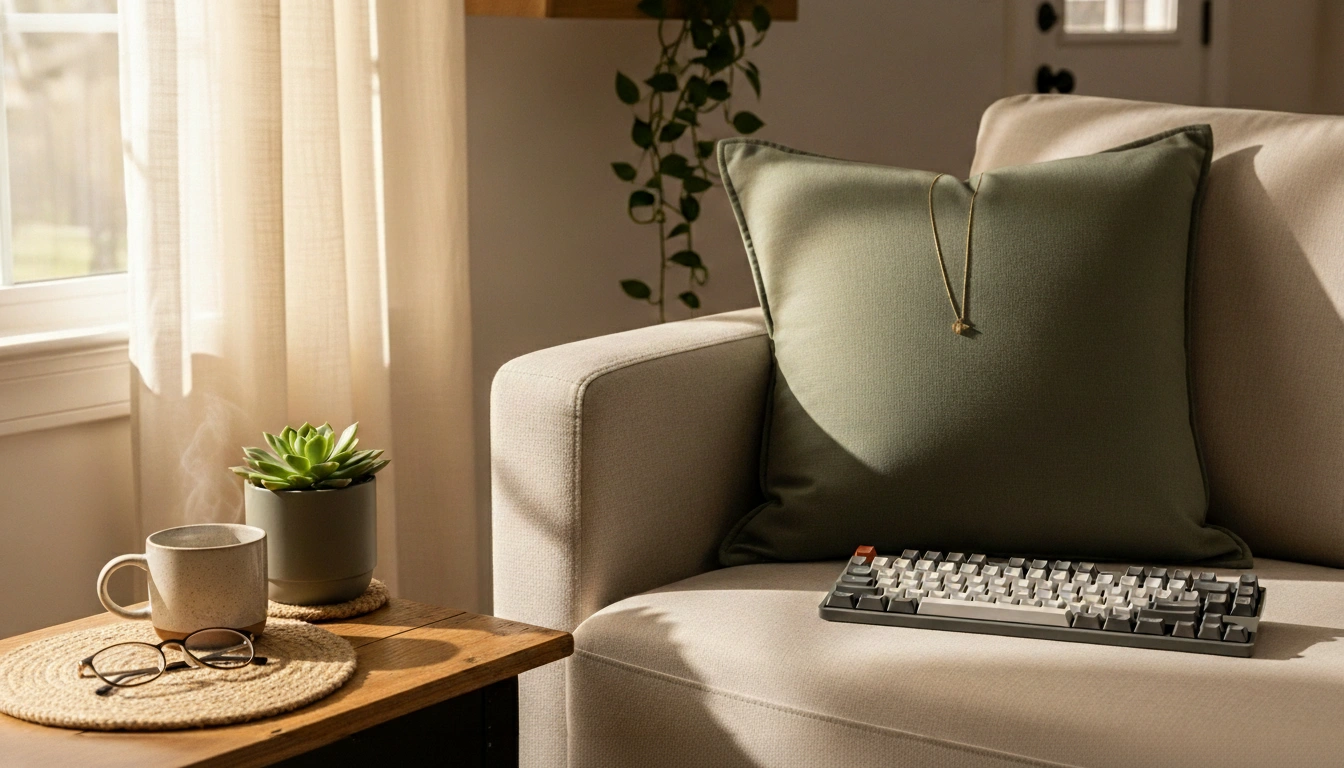
The 18×18-inch throw pillow is the best-selling decorative pillow size across major retailers like Target, IKEA, and Wayfair. Pick one up off your couch right now. One side of that pillow? Exactly 18 inches.
2. Full-Size Computer Keyboard
A standard full-size keyboard with a number pad measures 17–18 inches across. If you’re reading this at a desk, look down. You’re staring at 18 inches.
3. Princess-Length Necklace Chain
In the jewelry industry, the 18-inch chain is called “princess length.” It sits right at the collarbone — the single most popular necklace length sold worldwide. If you own any necklace, there’s a strong chance it’s 18 inches.
4. Standard Floor Tile
Walk into any home improvement store and you’ll see 18×18-inch ceramic and porcelain tiles dominating the displays. One tile side = one perfect 18-inch reference. Builders prefer this size because it covers ground quickly while keeping grout lines minimal.
5. Large Cutting Board
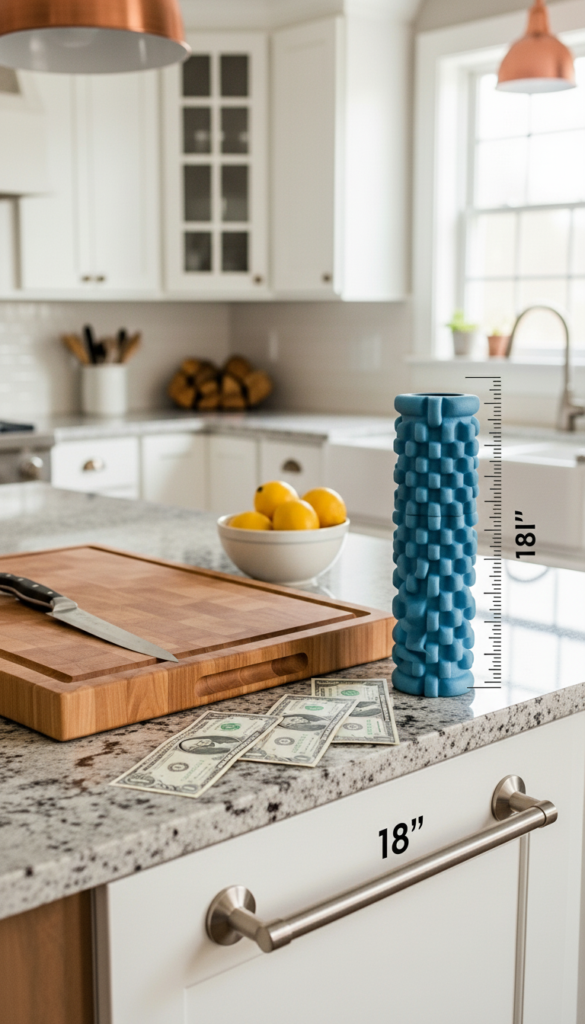
The generous cutting boards that serious home cooks reach for — the ones big enough to break down a whole chicken — typically measure 18 inches on the long side. If you’ve ever cooked a Thanksgiving turkey, you’ve worked on an 18-inch surface.
6. American Girl Doll
Since 1986, every American Girl doll has stood exactly 18 inches tall. If you grew up with one (or your kids did), that’s a deeply familiar reference. Over 32 million of these dolls have been sold, according to Mattel’s reporting.
7. Small Bathroom Towel Bar
The compact towel bar in half-baths and powder rooms almost always measures 18 inches. It’s the standard “small” size from manufacturers like Moen and Delta. Check your bathroom — you might be looking at 18 inches right now.
8. Travel Foam Roller
Compact foam rollers designed for travel and targeted muscle work come in an 18-inch length. This is the size physical therapists recommend for back work because it’s wide enough to support your shoulders without rolling off center.
9. Fireplace Log
Firewood suppliers cut logs to 16–18 inches as standard because that length fits most residential fireplaces and wood stoves. A single log in your firewood stack is a near-perfect 18-inch reference.
10. Dining Chair Seat Height
The distance from the floor to the seat of a standard dining chair is 17.5–18.5 inches, with 18 inches being the industry default. This height pairs with 30-inch dining tables to create proper ergonomic posture — thighs parallel to the floor, feet flat.
Where 18 Inches Shows Up in Real Decisions
Knowing how big 18 inches is only matters if you know when that knowledge saves you money, time, or frustration. Here’s where this measurement actually affects your life.
Furniture Shopping Online
That cabinet depth listed as 18 inches? It means it’ll stick out about one forearm-length from your wall. Upper kitchen cabinets standardize at 12 inches deep, so an 18-inch piece extends 50% farther. Measure twice before you click “add to cart.”
Jewelry Buying Without Trying On
An 18-inch necklace sits at the collarbone on most women and at mid-chest on most men. A 16-inch choker feels tight. A 20-inch matinee length hangs lower. When shopping online, 18 inches is the safest default for a gift.
| Necklace Length | Name | Where It Sits |
|---|---|---|
| 14 inches | Collar | Tight around neck |
| 16 inches | Choker | Base of neck |
| 18 inches | Princess | At the collarbone |
| 20 inches | Matinee | Below collarbone |
| 24 inches | Opera | Center of chest |
Home Renovation Tile Selection
18-inch floor tiles cover a room faster than 12-inch tiles (you need 56% fewer tiles for the same area). Fewer tiles means fewer grout lines, which creates a cleaner visual and less maintenance. The trade-off: 18-inch tiles require a flatter subfloor — any unevenness greater than 1/8 inch causes lippage (where tile edges sit at different heights).
Checking Airline Carry-On Fit
Most domestic airlines allow carry-on bags up to 22 inches tall. An 18-inch bag — typically marketed as a “personal item plus” — fits under virtually every airline seat. If you’re a frequent traveler, 18 inches is the magic number for bags that never get gate-checked.
How to Measure 18 Inches Without Any Tools
No tape measure? No problem. Three reliable methods:
Method 1 — The Forearm: Elbow to fingertips. Most adults fall within one inch of 18 inches using this technique. Calibrate yours once against a ruler and you’ll have a tool for life.
Method 2 — Dollar Bills: A U.S. dollar bill measures 6.14 inches long. Line up three bills end to end and you get 18.42 inches — close enough for any practical estimate.
Method 3 — Standard Paper (Diagonal): A sheet of U.S. letter paper (8.5 × 11 inches) has a diagonal measurement of about 13.9 inches. Not quite 18 — but add your hand width (about 4 inches) and you’re there.
The dollar bill method wins for accuracy. Keep three bills flat on a table and you’ve got an 18-inch straightedge accurate to within half an inch.
The Measurement Context Most Guides Miss: Scale vs. Proportion
Here’s something no other guide on this topic addresses: 18 inches feels different depending on what it’s measuring.
An 18-inch shelf looks small on a 12-foot wall. An 18-inch necklace feels snug on a person with broad shoulders. An 18-inch pizza box barely fits in a standard refrigerator (most fridge shelves are 16–18 inches deep, so you’re sliding it in edge-to-edge).
The lesson? Don’t just know the absolute measurement — consider what it’s relative to. Professional interior designers call this “proportion awareness,” and it’s the difference between furniture that looks right and furniture that technically fits but feels off.
Ask yourself: What surrounds this 18-inch object? A throw pillow looks perfectly scaled on a standard 84-inch sofa (about 21% of the sofa width). The same pillow looks enormous on a 48-inch loveseat (37% of the width). Same measurement, completely different visual impact.
18 Inches in Metric Countries: What You Need to Know
If you’re working between imperial and metric systems — buying from European retailers, following metric DIY plans, or shopping from international websites — these quick conversions prevent expensive mistakes:
- 45 cm ≈ 17.7 inches (not quite 18 — a 0.3-inch difference that matters for precision tile work)
- 46 cm ≈ 18.1 inches (the closest round metric equivalent)
- 50 cm ≈ 19.7 inches (a common metric standard that people mistake for 18 inches — it’s actually 1.7 inches longer)
The mistake to avoid: Assuming 45 cm equals 18 inches. It doesn’t. The exact equivalent is 45.72 cm. On a single tile, that 0.72 cm difference is negligible. Across a floor of 50 tiles, the cumulative error reaches 36 cm — over a foot of drift. Always use the precise conversion for construction work.
Frequently Asked Questions About 18 Inches
Q: How big is 18 inches in real life?
A: 18 inches equals the length of an average adult’s forearm from elbow to fingertips. In everyday objects, it matches a standard throw pillow side, a full-size computer keyboard width, or a princess-length necklace chain. It’s 1.5 feet — noticeably longer than a 12-inch ruler but shorter than a two-foot shelf.
Q: Is 18 inches the same as 1.5 feet?
A: Yes, exactly. 18 divided by 12 (inches per foot) equals 1.5. This also means 18 inches is precisely half a yard (36 inches ÷ 2 = 18 inches), which is useful when buying fabric or ribbon.
Q: What’s the difference between 18 inches and 45 centimeters?
A: 18 inches equals 45.72 centimeters — not exactly 45 cm. The 0.72 cm gap seems minor but compounds over multiple measurements. For rough estimates, 45 cm works. For tile work, construction, or sewing, use 45.72 cm.
Q: How do I measure 18 inches without a ruler?
A: Three methods: use your forearm (elbow to fingertips for most adults), line up three U.S. dollar bills end to end (18.42 inches total), or measure 1.5 times the length of a standard 12-inch ruler. The forearm method is fastest; the dollar bill method is most accurate.
Q: What necklace length is 18 inches?
A: The jewelry industry calls an 18-inch necklace “princess length.” It sits at the collarbone on most women and is the most commonly purchased chain length worldwide. It works with crew necks, V-necks, and most necklines without adjustment.
Q: How tall is 18 inches compared to a person?
A: 18 inches reaches just below the knee for most adults between 5’4″ and 5’10” tall. It equals 30% of the height of a 5-foot person, or about the distance from the floor to a standard dining chair seat.
Q: Can I visualize 18 inches using my phone?
A: Yes. An iPhone 16 Pro measures 5.89 inches tall. Stack three phones end to end (physically or mentally) and you get 17.67 inches — within half an inch of 18. Three Samsung Galaxy S24 phones (5.79 inches each) reach 17.37 inches. Close enough for a quick visual check.
What to Do Next
You now have a permanent mental model for 18 inches. Here’s how to lock it in:
Step 1: Stand up, extend your arm, and measure from elbow to fingertips. That’s your personal calibration. Note whether you’re slightly over or under 18 inches so you can mentally adjust in the future.
Step 2: Walk to your couch and pick up a throw pillow. Feel its side. That muscle memory lasts longer than reading numbers on a screen.
Step 3: Next time you shop online and see “18 inches” in a product listing, pause and place your forearm next to the space where the item will go. If it fits your forearm, it fits the space.
Measurement literacy isn’t about memorizing conversion charts — it’s about building physical intuition. And you just built yours.