

Planning a shade garden requires knowing exactly how much space each perennial will command after 3 to 4 seasons. Planting too tightly invites fungal diseases, while spacing too loosely leaves barren gaps in your spring landscape. Understanding the precise mature dimensions of these early bloomers ensures your woodland beds look intentional and thrive for decades.
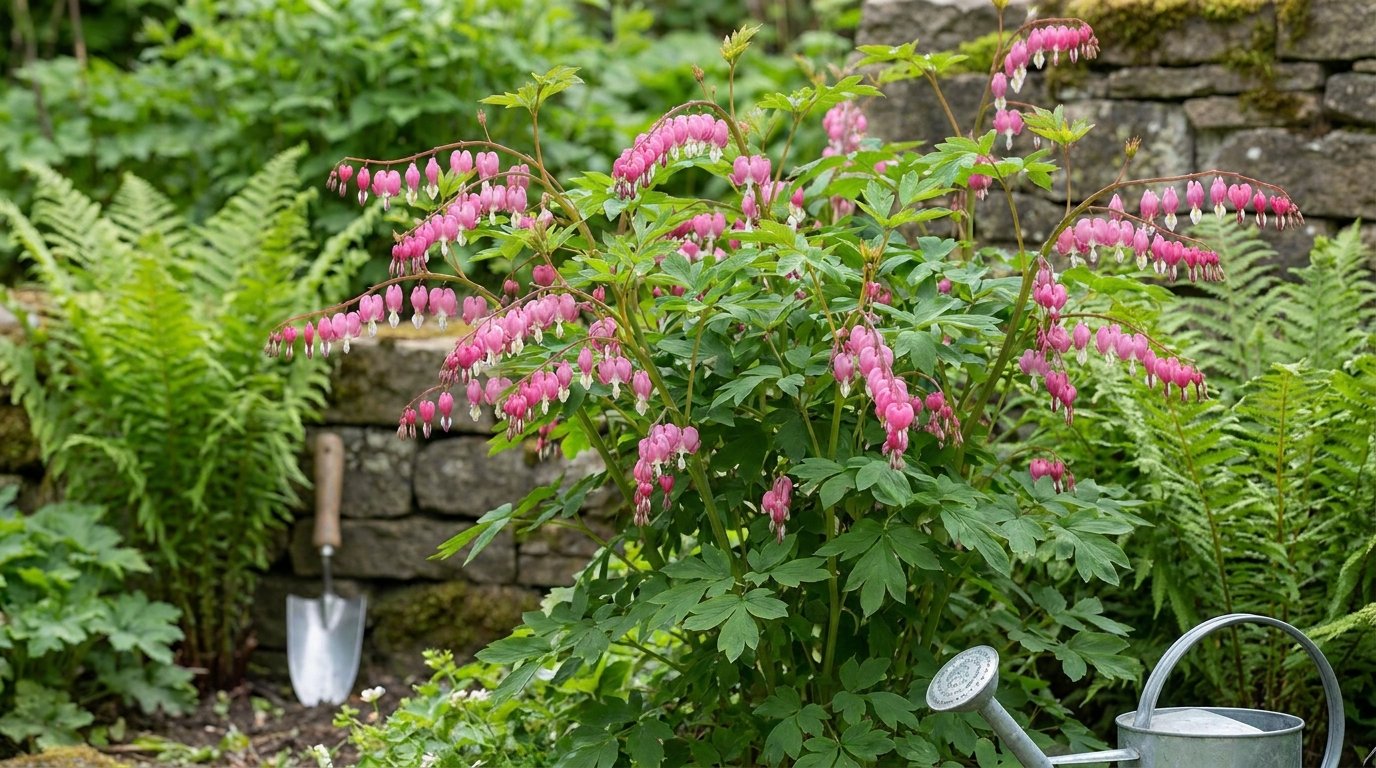
Standard bleeding heart plants create a substantial footprint in the spring garden before fading back in the summer heat. The iconic old-fashioned bleeding heart pushes up rapid growth early in the season, quickly achieving a shrub-like presence.
Gardeners asking how big do bleeding hearts get usually picture this classic variety. It commands a massive 36-inch by 36-inch footprint under optimal woodland conditions. These plants feature arching, fleshy stems that extend outward rather than growing strictly vertical.
Root systems form dense, brittle crowns that slowly expand outward by a few inches each year. Knowing this growth habit helps you position them perfectly behind lower-growing ground covers like sweet woodruff or hostas. Despite the expansive foliage in May, this entire 3-foot canopy disappears completely by August.
How big do bleeding hearts get at maturity?
Answering how big do bleeding hearts get requires identifying the specific species you plan to install. According to the North Carolina Extension (2024), the traditional old-fashioned bleeding heart (Lamprocapnos spectabilis) behaves like a medium-sized shrub during its peak spring display. Expect a healthy, established specimen to reach between 24 and 36 inches in total height. The spread mirrors the height almost exactly, creating a symmetrical 2- to 3-foot mound of foliage and flowers.
Such dimensions assume the plant has reached full maturity, which takes about three to four growing seasons. First-year transplants rarely exceed 18 inches in either direction. The arching flower stems contribute significantly to the overall width, extending outward from the central crown.
What factors determine how big do bleeding hearts get?
Several environmental conditions dictate exactly how big do bleeding hearts get in a residential landscape. Soil moisture levels drive the most significant variations in mature size. Plants situated in consistently moist, humus-rich soil maximize their genetic potential and hit that 36-inch mark easily.
Conversely, specimens planted in dry, sandy soils often stunt at 18 to 24 inches tall. Sun exposure also plays a critical role in foliar expansion. Too much direct afternoon sun scorches the leaves and forces the plant into early dormancy before it achieves maximum size.
Bleeding hearts require dappled shade or morning sun only to build their largest possible canopy. The nutrient density of your soil acts as the final limiting factor. Applying an annual top-dressing of organic compost provides the nitrogen necessary for explosive spring growth.
Mature sizes of popular bleeding heart varieties
Specific cultivar selections dictate the final dimensions you must plan for. Modern breeding programs have introduced several compact variations to the market alongside the traditional giants. Fern-leaf bleeding hearts (Dicentra eximia) offer a completely different scale for smaller borders.
| Variety Name | Botanical Name | Mature Height | Mature Spread |
|---|---|---|---|
| Old-Fashioned | Lamprocapnos spectabilis | 24-36 inches | 24-36 inches |
| Alba (White) | Lamprocapnos spectabilis ‘Alba’ | 24-30 inches | 24-30 inches |
| Gold Heart | Lamprocapnos spectabilis ‘Gold Heart’ | 24-36 inches | 24-36 inches |
| Fringed Bleeding Heart | Dicentra eximia | 12-18 inches | 12-18 inches |
| Western Bleeding Heart | Dicentra formosa | 12-18 inches | 24-36 inches |
Golden foliage on the ‘Gold Heart’ variety matches the traditional species in physical size. Fringed and western varieties stay much lower to the ground, acting more like spreading groundcovers rather than upright mounds.
How much space do bleeding hearts need when planting?
Proper spacing prevents overcrowding once the bleeding heart reaches its mature size. For standard old-fashioned varieties, install new crowns at least 2.5 to 3 feet apart. This spacing feels excessively wide during the first year of growth.
Resist the urge to plant them closer together. By year three, the canopies will gently touch, creating a seamless drift of spring foliage without restricting air circulation. Poor air flow through a dense 3-foot canopy invites powdery mildew and fungal leaf spots.
Smaller fern-leaf varieties require you to adjust your spacing to 15 to 18 inches apart. You can interplant spring bulbs like daffodils and tulips between your bleeding hearts. The expansive bleeding heart foliage emerges just in time to hide the dying bulb leaves.
Do bleeding hearts spread or stay contained?
Understanding how big do bleeding hearts get over time involves looking at their root systems. Old-fashioned bleeding hearts grow from centralized crowns and do not send out aggressive runners. The footprint expands slightly each year as the crown widens, but it remains a stationary clump.
Single crowns increase their diameter by 1 to 2 inches annually. Western bleeding hearts (Dicentra formosa), however, spread via underground rhizomes. This species will gradually colonize a woodland floor if left unchecked, creating a mat of foliage rather than a discrete mound.
Gardeners control the footprint of clump-forming varieties by dividing the fleshy roots every four to five years. Dig up the mature crown in early spring before growth begins. Use a sharp spade to slice the crown in half, immediately halving the plant’s overall size.
Accounting for summer dormancy in your garden plan
Massive spring growth from a standard bleeding heart creates a unique landscape challenge by mid-summer. As temperatures rise above 75 degrees Fahrenheit in July, the plant enters ephemeral dormancy. The 3-foot canopy turns yellow and collapses entirely to the ground.
Such a vanishing act leaves a significant 36-inch hole in your garden bed. Smart landscape planners account for this disappearance by positioning late-emerging perennials nearby. Plants like hostas, ferns, and astilbes expand their own foliage just as the bleeding heart retreats.
Never plant a slow-growing, low-light plant directly underneath the spring canopy of a bleeding heart. The aggressive spring growth will smother the smaller plant before July arrives. Plan your surrounding companions based on the bleeding heart’s maximum May dimensions.
Frequently Asked Questions
How fast do bleeding hearts grow?
Bleeding hearts grow incredibly fast in the early spring, shooting from bare ground to a full 3-foot shrub in just four to six weeks. The overall root crown takes three to four years to reach its maximum mature diameter.
Can you grow bleeding hearts in pots?
You can grow bleeding hearts in containers, but the restricted root space typically limits their maximum size to 18 or 24 inches. Choose a large pot at least 16 inches in diameter to accommodate the fleshy, brittle root system.
Do bleeding hearts come back every year?
Yes, bleeding hearts are herbaceous perennials that reliably return each spring in hardiness zones 3 through 9. The entire above-ground plant dies back in the summer or fall, while the roots survive freezing winter temperatures underground.
Accurately anticipating how big do bleeding hearts get guarantees a well-structured and healthy shade garden. Before purchasing new bare-root crowns or nursery pots, measure your available bed space carefully. Map out a full 36-inch circle for every standard old-fashioned bleeding heart you intend to plant. If your available space measures less than 2 feet across, pivot your selection to a compact fern-leaf variety instead. Prepare your planting holes with ample compost to ensure the roots have the nutrients required to support rapid spring growth. Mark the planting location with a permanent stake so you do not accidentally dig into the dormant crowns during fall cleanup. Remember that successful perennial gardening requires designing for the mature dimensions of year three, not the modest size of year one.
Disclaimer: This content is for informational landscape planning purposes only and does not constitute professional horticultural or agricultural advice. Always consult with your local university extension office for specific planting guidelines tailored to your regional climate and soil conditions.
