

You’re staring at a product listing that says “15 inches” — and your brain draws a blank. Is that big enough for your desk? Too wide for that shelf? Will it actually fit in your bag?
Fifteen inches is one of those measurements that sounds familiar but stays frustratingly vague until you anchor it to something real. This guide fixes that permanently. We’ve measured, compared, and photographed dozens of everyday objects so you can picture 15 inches instantly — whether you’re shopping online, tackling a DIY project, or settling an argument about pizza sizes.
15 Inches: The Quick Answer
Fifteen inches equals 38.1 centimeters, 1.25 feet, or 0.381 meters. That’s exactly one foot plus three inches — picture a standard 12-inch ruler, then add a quarter more length.
Here’s the conversion you can bookmark:
| Unit | 15 Inches Equals |
|---|---|
| Centimeters (cm) | 38.1 cm |
| Millimeters (mm) | 381 mm |
| Feet (ft) | 1.25 ft |
| Meters (m) | 0.381 m |
| Yards (yd) | 0.417 yd |
The fastest way to convert inches to centimeters: multiply by 2.54. So 15 × 2.54 = 38.1 cm exactly. That formula works for any inch-to-cm conversion you’ll ever need.
But numbers alone don’t help you see the size. That’s where real-world comparisons come in.
How Big Is 15 Inches Compared to Your Body?
Your body is the most reliable measuring tool you’ll never lose. These three references work anywhere, anytime — no ruler required.
Your Forearm: The Built-In 15-Inch Ruler
Place your fingertips flat on a table. Now measure from your elbow crease to your fingertips. For most adults, that distance falls between 15 and 17 inches. The average adult forearm sits almost exactly at 15 inches.
This is the single most useful body-based measurement hack. Next time you’re at a furniture store wondering if something will fit, stretch out your forearm. Done.
Two Hand Spans Side by Side
Spread your fingers wide — thumb tip to pinky tip. The average adult hand span measures 7 to 8 inches. Place both hands flat side by side, and you’re looking at roughly 15 inches across.
The Dollar Bill Trick
A U.S. dollar bill measures 6.14 inches long. Line up two bills end-to-end and you’ve got 12.28 inches. Add half of a third bill, and you’re at 15.35 inches — close enough for any quick estimate. Keep two bills in your wallet, and you’ve always got a portable measuring reference.
Here’s what most people miss: the forearm method is accurate within half an inch for 80% of adults. It’s the one worth committing to memory.
12 Common Objects That Are 15 Inches (Grouped by Where You’ll Find Them)
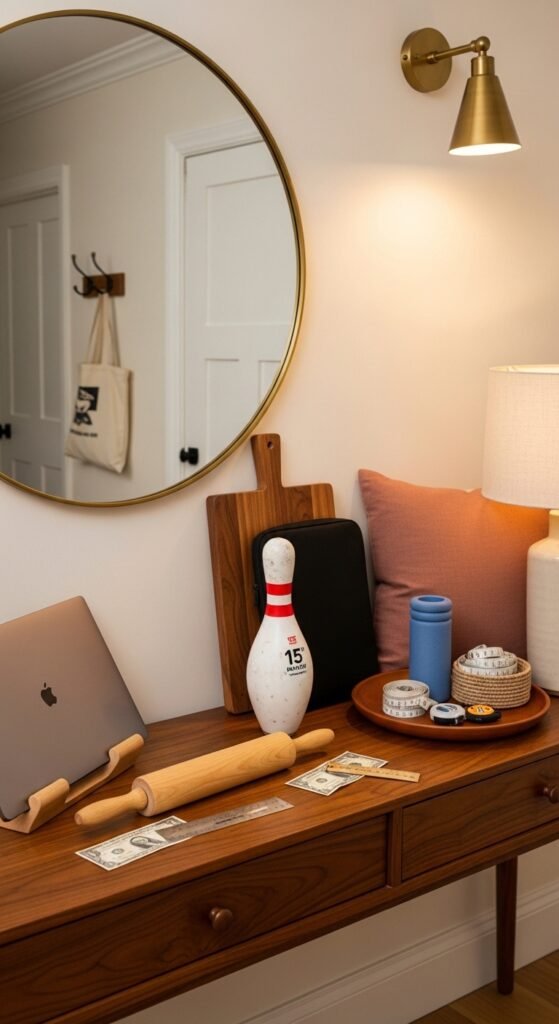
Most “how big is 15 inches” guides throw a random list at you. That doesn’t help when you’re standing in your kitchen trying to visualize a measurement. So we’ve organized these by location — find where you are right now and grab the nearest reference.
At Your Desk
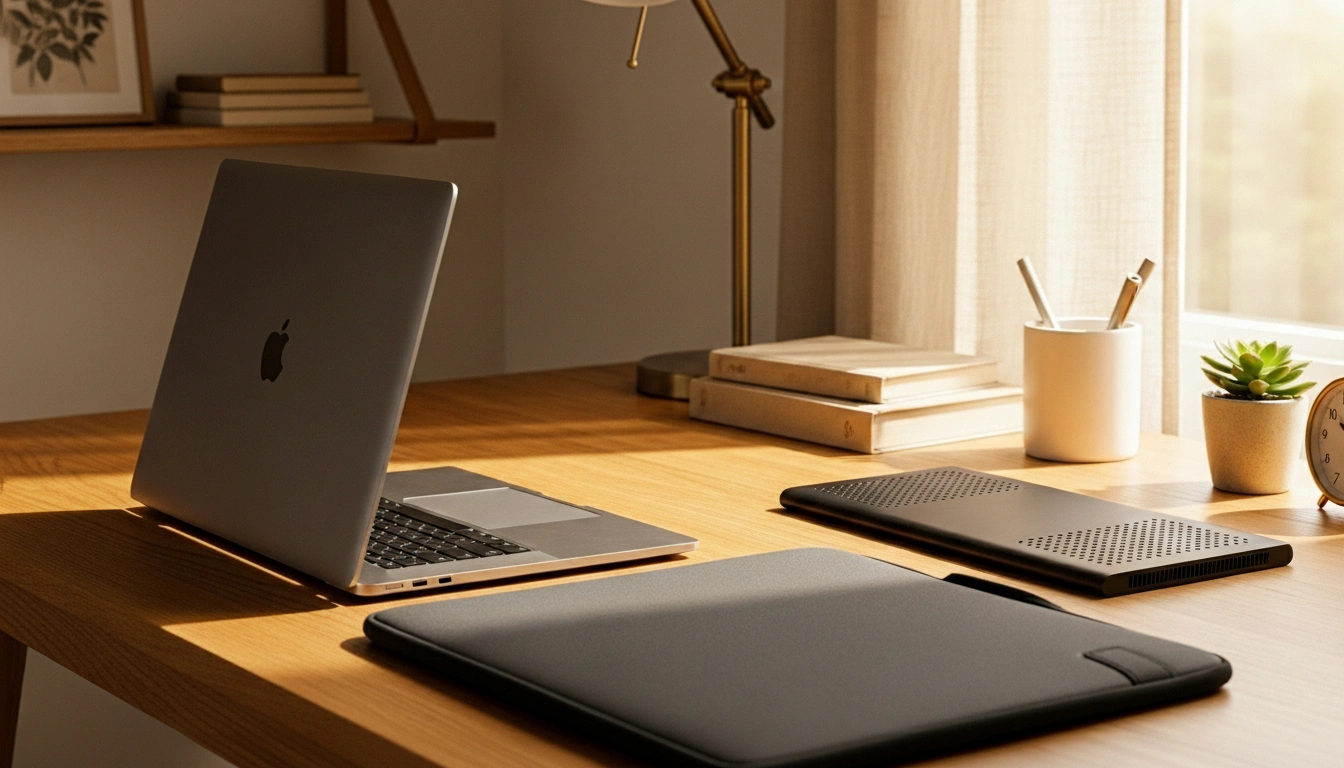
15-inch laptop screen — The 15.6-inch diagonal display is the world’s most popular laptop size. Dell, HP, Lenovo, and Apple all build flagship models around this dimension. If you’ve ever used a standard work laptop, you’ve held 15 inches in your hands.
Laptop cooling pad — These are engineered to match the 15-inch laptop footprint exactly. Manufacturers can’t afford to guess here — an undersized pad means an overheating laptop.
Laptop sleeve — That padded case you carry daily? For a 15-inch laptop, the sleeve itself measures 15 to 16 inches. Millions of commuters carry a near-perfect 15-inch reference in their bags every morning without realizing it.
In Your Kitchen
Large pizza — A standard “large” at most major chains (Domino’s, Pizza Hut, Papa John’s) measures 14 to 16 inches in diameter. The sweet spot? Fifteen inches. Next time you order, you’re literally holding 15 inches of cheesy reference material.
Rolling pin — Most standard home rolling pins run exactly 15 inches along the barrel. Check yours right now — odds are strong it’s sitting at that mark.
Cutting board — Professional and home cutting boards frequently measure 15 inches across their width. The 15×20-inch board is the workhorse size in both commercial and home kitchens.
In Your Living Room
Throw pillow (large square) — Decorative pillows measuring 15×15 inches are an interior design staple. They’re the go-to accent size — large enough to make a visual statement, small enough not to swallow your couch.
Steering wheel — Universal steering wheel covers fit wheels measuring 14.5 to 15.5 inches in diameter. Fifteen inches is the standard across most passenger vehicles. Sit in your car, grip the wheel, and you’re holding the measurement.
In a Bowling Alley (Seriously)
Bowling pin — Here’s a fact that surprises almost everyone: a regulation bowling pin stands exactly 15 inches tall. The United States Bowling Congress mandates this dimension. It’s one of the most precisely manufactured 15-inch objects in existence.
This one sticks in your brain. Tell someone “15 inches is the height of a bowling pin” and they’ll never forget it.
The “15-Inch Test”: How to Measure Without Tools
Sometimes you need to estimate 15 inches and you’ve got no ruler, no tape measure, and no bowling pin handy. Here’s a ranked system from most to least accurate:
| Method | How It Works | Accuracy |
|---|---|---|
| Forearm (elbow to fingertips) | Stretch arm, measure naturally | ±0.5 inches |
| Two dollar bills + half | Lay end-to-end on surface | ±0.4 inches |
| Two hand spans | Spread fingers, place side by side | ±1 inch |
| Standard ruler + 3 fingers | 12-inch ruler plus ~3 finger widths | ±0.5 inches |
| Three soda cans (stacked height) | Stack three 12-oz cans vertically | ±0.6 inches |
Pro tip: The forearm method and the dollar bill method are the only two worth memorizing. They cover 99% of situations where you need a quick estimate.
Why 15 Inches Matters: Real Buying Decisions Where This Measurement Shows Up
Knowing how big 15 inches is isn’t trivia — it directly affects purchases you’ll make this year. Here’s where this measurement impacts your wallet.
Laptop Shopping
The 15-inch laptop is the most-sold screen size globally for a reason: it balances portability and screen real estate. But “15 inches” refers to the diagonal screen measurement, not the width or height. The actual screen width on a 15.6-inch laptop is roughly 13.6 inches, and the height is about 7.6 inches.
That distinction matters. If you’re buying a laptop bag, monitor stand, or desk tray, you need the overall chassis dimensions — which are typically 14.5 × 10 inches for a 15-inch laptop. The 15-inch diagonal number alone won’t help you pick the right accessories.
Furniture and Shelving
A 15-inch-wide shelf is the sweet spot for bathroom storage, book nooks, and bedside tables. It’s deep enough to hold standard paperbacks (most are 5 × 8 inches) but shallow enough to avoid the “stuff falls behind it” problem that plagues deeper shelves.
If you’re shopping for floating shelves online and the listing says “15 inches,” now you know: that’s roughly your forearm length. Substantial, but not bulky.
Online Shopping in General
A 2024 survey by the National Retail Federation found that roughly 30% of online purchases are returned, with “item was different size than expected” ranking among the top three reasons. Visualizing 15 inches before you click “buy” saves you the hassle of returns, repackaging, and waiting for replacements.
Here’s a reflection question worth pausing on: How many online purchases have you returned because the size surprised you? Anchoring measurements to real objects solves that problem permanently.
15 Inches vs. Similar Measurements: A Quick Comparison
If you’re comparing sizes — say, deciding between a 13-inch and 15-inch laptop, or choosing between shelf widths — this table puts the differences in perspective:
| Measurement | In CM | In Feet | Comparable Object |
|---|---|---|---|
| 12 inches (1 foot) | 30.5 cm | 1.0 ft | Standard ruler |
| 13 inches | 33.0 cm | 1.08 ft | 13-inch laptop screen |
| 14 inches | 35.6 cm | 1.17 ft | Medium pizza |
| 15 inches | 38.1 cm | 1.25 ft | Bowling pin height / large pizza |
| 16 inches | 40.6 cm | 1.33 ft | Large laptop screen |
| 17 inches | 43.2 cm | 1.42 ft | Desktop monitor (small) |
The jump from 12 to 15 inches — just three inches — adds 25% more length. That’s more significant than it sounds. On a laptop screen, those three extra inches translate to roughly 40% more screen area (because area scales with the square of the diagonal).
That’s why 15-inch laptops feel dramatically more spacious than 13-inch models, despite the seemingly small numerical difference.
Common Misconceptions About 15 Inches
“15 inches on a laptop screen means the screen is 15 inches wide.” Wrong. The 15-inch measurement is the diagonal — corner to corner. The actual width is closer to 13.6 inches on a standard 16:9 display. This trips up countless shoppers who buy accessories based on the wrong dimension.
“A foot and a half is 15 inches.” Also wrong — and surprisingly common. A foot and a half is 18 inches. Fifteen inches is one foot and three inches (1.25 feet). Mixing these up leads to ordering the wrong size curtains, shelves, and furniture more often than you’d think.
“You need a measuring tape to estimate 15 inches.” Not even close. Your forearm, two dollar bills, or a standard ruler plus three finger-widths all get you within half an inch. The tools are already on you.
Practical Applications: When You’ll Actually Need to Know This
Beyond shopping, here are situations where visualizing 15 inches saves time:
- Hanging picture frames: A 15-inch gap between frames on a gallery wall creates balanced spacing without looking sparse.
- Checking carry-on dimensions: Most airline personal item limits hover around 15 × 10 × 6 inches. Your forearm tells you if that bag fits.
- Planting garden rows: Many vegetable spacing guides recommend 15-inch gaps between rows of peppers, tomatoes, and squash.
- Choosing a backpack: Youth and compact adult backpacks often measure 15 inches in height — suitable for day trips but not multi-day hikes.
FAQ: How Big Is 15 Inches?
Q: How long is 15 inches in centimeters?
A: Fifteen inches equals exactly 38.1 centimeters. Multiply any inch measurement by 2.54 to convert to centimeters. This conversion factor is exact — 1 inch has been internationally defined as precisely 2.54 cm since 1959.
Q: Is 15 inches bigger than a foot?
A: Yes. One foot equals 12 inches, so 15 inches is exactly 3 inches longer than a foot — or 25% longer. The difference is roughly the width of three adult fingers placed side by side.
Q: What common household item is 15 inches?
A: A regulation bowling pin (exactly 15 inches tall), a standard rolling pin, and a large pizza diameter are all 15 inches. The most universally relatable is the 15-inch laptop screen, which most people have used or owned.
Q: How do I measure 15 inches without a ruler?
A: Use your forearm — the distance from your elbow to your fingertips averages 15 inches for most adults. Alternatively, place two U.S. dollar bills end-to-end and add half of a third bill for a 15.35-inch estimate.
Q: What’s the difference between a 13-inch and 15-inch laptop?
A: The 2-inch diagonal difference translates to roughly 40% more screen area on the 15-inch model. The 15-inch chassis is typically 1.5 inches wider and 1 inch deeper, which affects bag fit and desk space. Choose 13-inch for portability, 15-inch for productivity.
Q: How tall is 15 inches in real life?
A: Fifteen inches tall is about the height of a bowling pin, a compact table fan, or a low storage bin. It’s tall enough to stand out on a shelf but short enough to fit under most desks and beds.
Q: Is 15 inches the same as 15 centimeters?
A: No — this is a common and costly mistake. Fifteen inches (38.1 cm) is more than 2.5 times longer than 15 centimeters (5.9 inches). Always check whether a product listing uses inches or centimeters before buying.
What to Do Next
You now have a permanent mental library of 15-inch references. Here’s how to put it to work:
- Memorize the forearm trick. Stretch your arm right now, elbow to fingertips. That’s your personal 15-inch ruler for life.
- Bookmark this page for the conversion table next time you’re shopping internationally.
- Check your next online purchase against the objects above before clicking “buy.” Visualize first, purchase second. Your return rate drops to near zero.
Measurement confusion costs real money and real time. But once you’ve anchored 15 inches to a bowling pin, a pizza, and your own forearm, the number stops being abstract — and starts being useful.
